
A UV DTF printer for candle jars is a practical niche for shops that serve makers, boutique brands, event sellers, gift companies, and small product businesses. Candle brands often need premium labels, small batches, seasonal collections, scent variations, sample jars, and fast artwork changes. Paper labels can work, but UV DTF transfers create a raised, glossy, durable look that feels more premium on glass, metal lids, acrylic packaging, and rigid gift boxes.
This guide explains the workflow, cost factors, durability expectations, product menu, and machine considerations for candle jars and product packaging. It supports the main UV DTF printer page and complements the existing UV DTF transfers for glass cups and cosmetic bottles article with a narrower packaging-focused search intent.
Why Candle Jars Are a Good UV DTF Niche
Candle businesses are highly visual. A label can decide whether the product looks handmade, premium, seasonal, minimalist, luxury, rustic, or gift-ready. Many candle makers sell in small batches, test new scents, and refresh designs for holidays. That makes UV DTF attractive because the shop can print transfers in small quantities and apply them to jars as orders come in.
Unlike a large packaging run, candle label work often changes by scent, collection, event, or store. A UV DTF workflow lets the seller offer a professional label without committing to thousands of printed containers. It also creates an upsell path: standard transfer, premium varnish, foil accent, matching lid label, gift box label, or sample kit.
Best Products to Sell
- Front labels for glass candle jars.
- Small scent labels and warning labels for jar bottoms.
- Logo transfers for lids, boxes, sleeves, and sample cards.
- Seasonal collections for holidays, weddings, and local events.
- Small-batch labels for test scents and limited editions.
- Premium packaging stickers for rigid gift boxes and product bundles.
This product menu connects naturally to broader applications of UV DTF printing while keeping the ranking target specific enough to compete.
How the UV DTF Candle Jar Workflow Works
The process uses printed transfer film rather than direct printing on every jar. The design is printed on film with CMYK, white, and varnish as needed. It is laminated, trimmed, applied to the jar, pressed evenly, and peeled. The result is a full-color hard-surface transfer that can look more premium than a paper label.
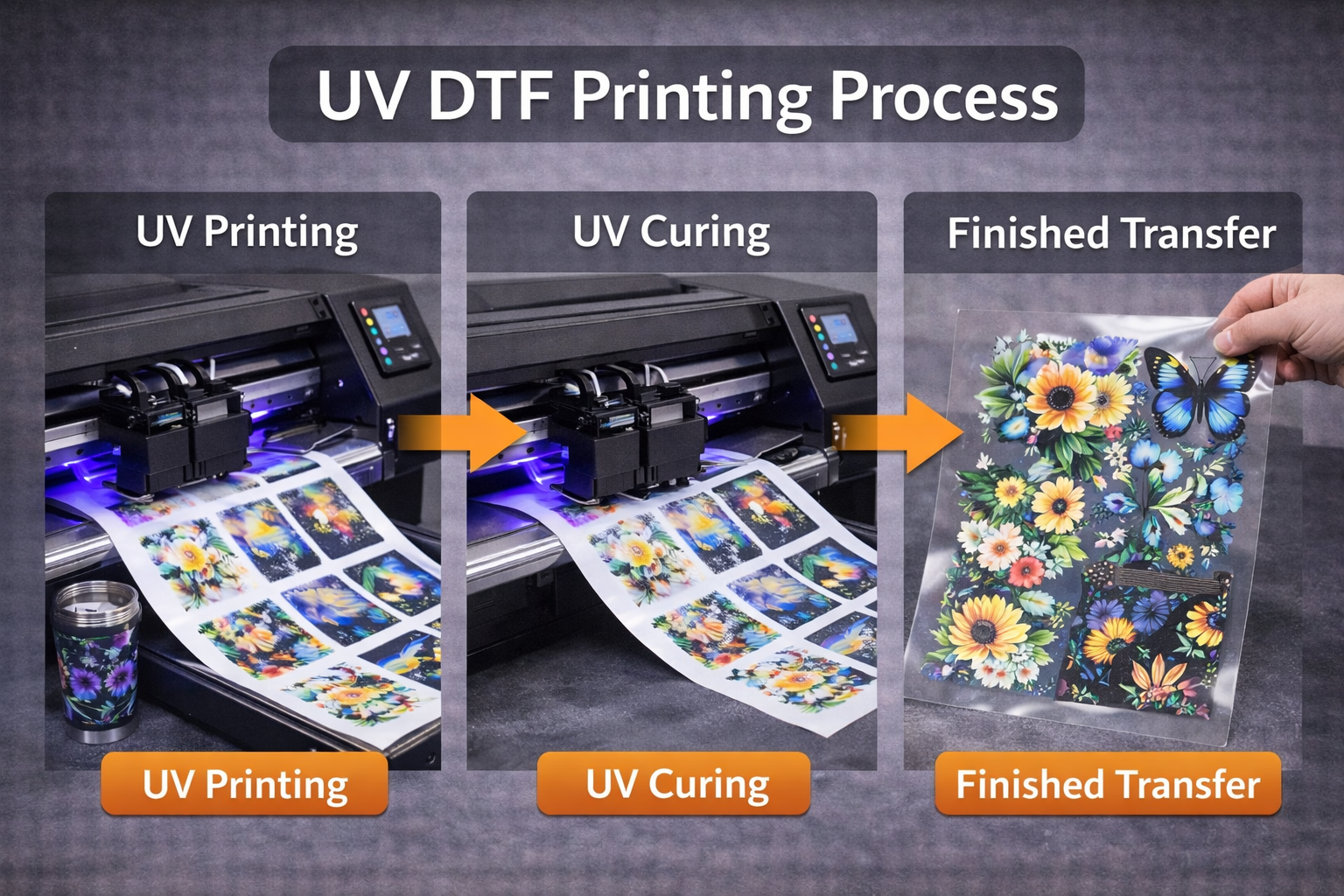
- Prepare the label design with correct size, safe margins, and high-resolution artwork.
- Print transfers on UV DTF film using the right white and varnish settings.
- Laminate with consistent pressure to avoid weak adhesion or bubbles.
- Cut sheets into application-ready labels.
- Clean jars, lids, boxes, or packaging surfaces before applying.
- Apply slowly with even pressure from one edge to the other.
- Peel and inspect edges, alignment, surface dust, and label clarity.
Design Rules for Candle Labels
Candle labels need more than a logo. They must communicate scent, brand style, weight, warnings, ingredients, batch details, or care instructions depending on the seller’s market. The front label should be readable at shelf distance, while bottom or back labels can hold smaller details. If the transfer is too busy, it may look premium online but confusing in person.
Practical Label Design Tips
- Keep the main scent name large enough to read in product photos.
- Use high contrast on amber, clear, frosted, or colored glass.
- Test white backing when printing light colors on dark jars.
- Keep fine script fonts thick enough for transfer durability.
- Use consistent label dimensions across the product line.
- Leave enough edge margin so transfers peel and apply cleanly.
The file preparation guide can help sellers avoid low-resolution logos, inconsistent margins, and artwork that is not production-ready.
Cost Factors for Candle Jar Transfers
| Cost Factor | Why It Matters | Quoting Note |
|---|---|---|
| Film and lamination | Every label consumes transfer film and adhesive film. | Price by sheet use and waste, not only visible label size. |
| White ink and varnish | Premium labels often need opacity and raised finish. | Offer standard and premium finish tiers. |
| Application labor | Straight placement on curved jars takes time. | Charge separately when the shop applies labels. |
| Design changes | Each scent may need its own text and proof. | Use setup fees or batch templates. |
| Testing | Different glass coatings and labels behave differently. | Include sample testing for new jar styles. |
Shops should avoid quoting candle jar transfers as simple stickers. The buyer is paying for premium appearance, short-run flexibility, and clean application.
Durability Expectations
UV DTF labels can perform well on candle jars, but realistic expectations are important. Jars may face handling, wax residue, oils, heat near the jar surface, shipping rub, and cleaning. Test the exact jar, transfer film, and use case before promising long-term performance. For gift or retail candle jars, the most important checks are edge lift, rubbing, oil contact, and label clarity after handling.
For candle warning labels or bottom labels, make sure the surface is clean and the label is not applied where it will scrape constantly. For luxury front labels, alignment and dust control matter as much as adhesion.
UV DTF vs Paper Labels vs Direct UV
| Method | Best Use | Limit |
|---|---|---|
| Paper label | Economy candles, large simple batches | Can feel less premium and may dislike moisture/oil. |
| UV DTF transfer | Premium small batches, seasonal labels, raised logo effects | Needs careful application and testing. |
| Direct UV printing | Flat packaging, compatible rigid surfaces, direct decoration | Compare the main UV printer workflow when printing directly on materials. |
| Foil UV DTF | Luxury candle lines and gift packaging | See the UV DTF foil stamping workflow for premium effects. |
The comparison article on UV printer vs UV DTF printer is useful when a shop is choosing whether direct printing or transfer printing should be the primary workflow.
Machine Features to Compare
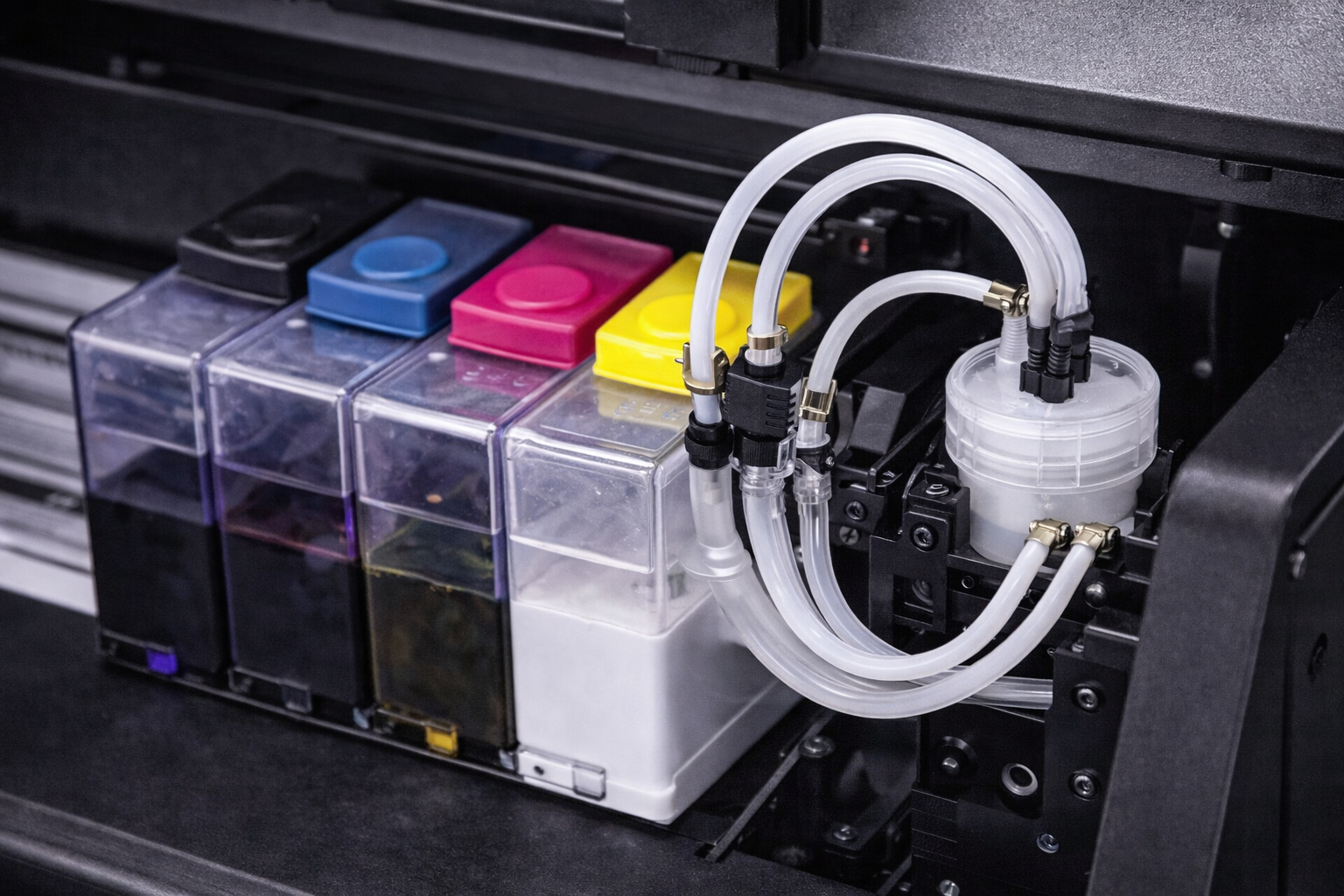
When buying a UV DTF printer for candle jars and packaging labels, compare white ink circulation, varnish consistency, film width, lamination workflow, maintenance access, ink stability, software handling, and support. Film waste and failed transfers are real costs, so a stable machine matters more than the cheapest entry price.
The main UV DTF printer page should be the next step for buyers comparing machine details after learning the candle jar workflow.
Sample Kit Strategy
A candle-label sample kit can make sales easier. Include a clear jar label, amber jar label, lid logo, bottom warning label, rigid box logo, and a premium varnish or foil sample. This helps candle makers compare finishes before placing a batch order. A paid sample kit also filters serious buyers from people who only want free design work.
Product Line Planning for Candle Brands
Candle brands rarely sell only one jar. They sell scent collections, seasonal sets, wedding favors, private-label batches, and limited editions. A UV DTF shop can turn that into a structured offer: one master label template, scent-specific text changes, matching lid labels, bottom warning labels, and packaging box graphics. This makes the order easier to manage and increases average order value.
Ask the customer how many scents are in the line, which jar sizes they use, whether labels need batch numbers, and whether they want the same design on boxes or sample tins. If the brand is still testing scents, offer a sample-pack workflow. If they are preparing for retail, offer a more formal proofing and repeat-order setup.
Compliance and Warning Label Details
Candle packaging often needs warning information. The exact requirements vary by market, so the print shop should not provide legal advice, but it should ask whether the buyer has approved warning text, weight information, scent names, company details, and care instructions. A beautiful front label is not enough if the product also needs a clear bottom label or back label for retail presentation.
For small brands, separate the creative label from the required information label. Use UV DTF for the premium front graphic, and offer matching small transfers or printed labels for warnings and batch details. This gives the customer a cleaner product system and creates more work from the same account.
Batch Fulfillment Workflow
Fulfillment discipline matters when one customer orders several scents or jar sizes. Print transfers by collection, label sheets clearly, and keep a proof copy for each scent. If the shop applies labels, sort finished jars by scent and order number. If the shop supplies transfers only, include application instructions and a few spare labels when appropriate.
For repeat orders, keep the template and approved label dimensions saved. A candle maker who returns for a fall collection should not have to restart the setup conversation. That repeatability is what turns UV DTF candle labels from a small custom job into a reliable monthly revenue source.
Design Guidelines for Premium Candle Labels
Candle labels need to look premium at a small size. Large decorative artwork can work on a box, but a jar label often needs stronger hierarchy: brand name, scent name, short descriptor, volume or weight, and a few visual details. A UV DTF transfer can reproduce rich color and raised detail, but it cannot fix a crowded layout. The design should be clean enough to read from a shelf or product photo.
For transparent or amber glass jars, test contrast before final approval. Gold, white, black, and muted earth tones may look different depending on the wax color and jar tint. If the buyer sells online, ask them to photograph the sample under the same lighting used for product listings. The label must work in real photos, not only in a mockup.
Application Quality Control
Application quality is where many UV DTF candle-label jobs succeed or fail. A premium transfer can still look poor if it is crooked, trapped with dust, or placed at inconsistent heights across a batch. For candles, the front label is part of the brand experience, so placement consistency matters. A simple measuring guide or wrap-around template can save time and reduce rejected jars.
For shops that sell transfers only, include short application instructions with every order. Explain surface cleaning, dust control, pressure, peel angle, and edge inspection. For shops that apply transfers in-house, assign one operator to a batch when possible, inspect the first few jars, and keep a reference sample visible during production.
Upsell Opportunities for Candle Makers
Candle makers often need more than one label. Once the front jar label is approved, the shop can offer lid logos, bottom warning labels, scent collection labels, sample tin labels, gift-box graphics, thank-you card branding, and seasonal limited-edition designs. This makes the UV DTF printer useful for a full product system rather than a single decoration job.
This is also why candle jars are a strong support topic for the main machine page. The buyer may begin by searching for labels, but the business opportunity points toward repeat transfer production, small-batch packaging, and brand customization. Those are commercial signals that can support the UV DTF printer page when the internal links are placed correctly.
When a UV DTF Printer for Candle Jars Is Not the Best Fit
UV DTF is not always the right label method. Very low-cost high-volume packaging may still be better served by paper labels, screen printing, or outsourced industrial labeling. A candle brand with strict retail compliance requirements may also need separate printed information labels. The print shop should explain these limits clearly because honest positioning improves trust and reduces refund risk.
A UV DTF printer for candle jars is strongest when the customer needs premium appearance, small batches, fast version changes, hard-surface application, and a no-weeding full-color transfer. That makes it a good fit for boutique candle makers, gift brands, seasonal product launches, wedding favors, private-label batches, and cosmetic-style packaging.
Internal Link Strategy for UV DTF Packaging Searches
This article should support the main UV DTF printer page and the broader UV DTF application cluster. Candle jars are specific enough to rank as a long-tail topic, while the internal links point buyers toward the commercial machine page, transfer workflow articles, foil stamping content, and product label guides.
The topic also helps separate UV DTF from direct UV printing. A candle seller may not know whether they need a flatbed UV printer, a UV DTF printer, or outsourced labels. By explaining candle jars and packaging directly, the article can attract product-focused searches and move buyers into the right machine comparison path.
What to Monitor After Publishing
This article should be checked for impressions around UV DTF candle labels, UV DTF printer for candle jars, custom candle jar labels, UV transfer labels for glass jars, boutique packaging labels, and product packaging transfers. Some of those searches may be service-oriented while others may be machine-oriented. That is useful because the content can introduce the workflow and then guide serious buyers to the right machine page.
If the post gets impressions but low clicks, the meta title can be tightened around candle jars and packaging. If it gets clicks but little movement to commercial pages, add stronger calls to compare the UV DTF printer, UV printer vs UV DTF printer, and UV DTF applications pages. If Search Console shows unexpected queries such as cosmetic jars, soap packaging, or spice jars, expand the article later with a short cross-product packaging section.
Sales Questions This Page Should Answer
- Can UV DTF transfers work on glass candle jars?
- How should candle brands test durability before selling retail products?
- What label types can be bundled into one candle packaging order?
- When is UV DTF better than paper labels or direct UV printing?
- Which machine features matter for repeat transfer quality?
Application Checklist
- Clean the jar surface before applying the transfer.
- Use a placement guide for repeat label position.
- Apply from one side to reduce bubbles and dust marks.
- Inspect edges after peeling.
- Test rub, oil, and handling when selling retail packaging.
- Store approved transfer sheets flat and labeled by scent or collection.
FAQ
Can UV DTF labels be used on candle jars?
Yes. UV DTF labels work well for many candle jars, especially premium short-run designs, seasonal collections, and small brand packaging. Always test the exact jar surface and usage conditions.
Are UV DTF candle labels waterproof?
They can resist normal handling better than many paper labels, but water, oils, heat, and abrasion should be tested before making durability claims.
Is UV DTF better than paper labels for candles?
UV DTF is better when the seller wants a premium raised finish, small-batch flexibility, and full-color hard-surface decoration. Paper labels may still be better for low-cost high-volume packaging.
Final Recommendation
A UV DTF printer for candle jars is a focused, rankable support topic because it connects a specific product niche with real machine-buying intent. Shops should sell sample kits, document film settings, test jar surfaces, and build clear pricing around design, film, application, and durability. The content should pass authority to the main UV DTF printer page while ranking for candle jar and boutique packaging searches.