
UV DTF transfers for glass cups, cosmetic bottles, jars, candle containers, acrylic packaging, and hard-surface labels have become popular because they let small businesses decorate objects without printing directly on every item. The workflow is flexible: print the design on film, laminate it, cut or trim it, then apply the transfer to the product surface. For custom gift shops, cosmetic brands, drinkware sellers, packaging sample makers, and promotional product suppliers, this can be faster than setting up a direct flatbed print for every small order.
This guide explains where UV DTF transfers work well, where they have limits, how to control cost, how to plan a product menu, and when a buyer should compare a dedicated UV DTF printer with direct UV printing. It is written for shops that want real production clarity, not just a list of generic transfer ideas.
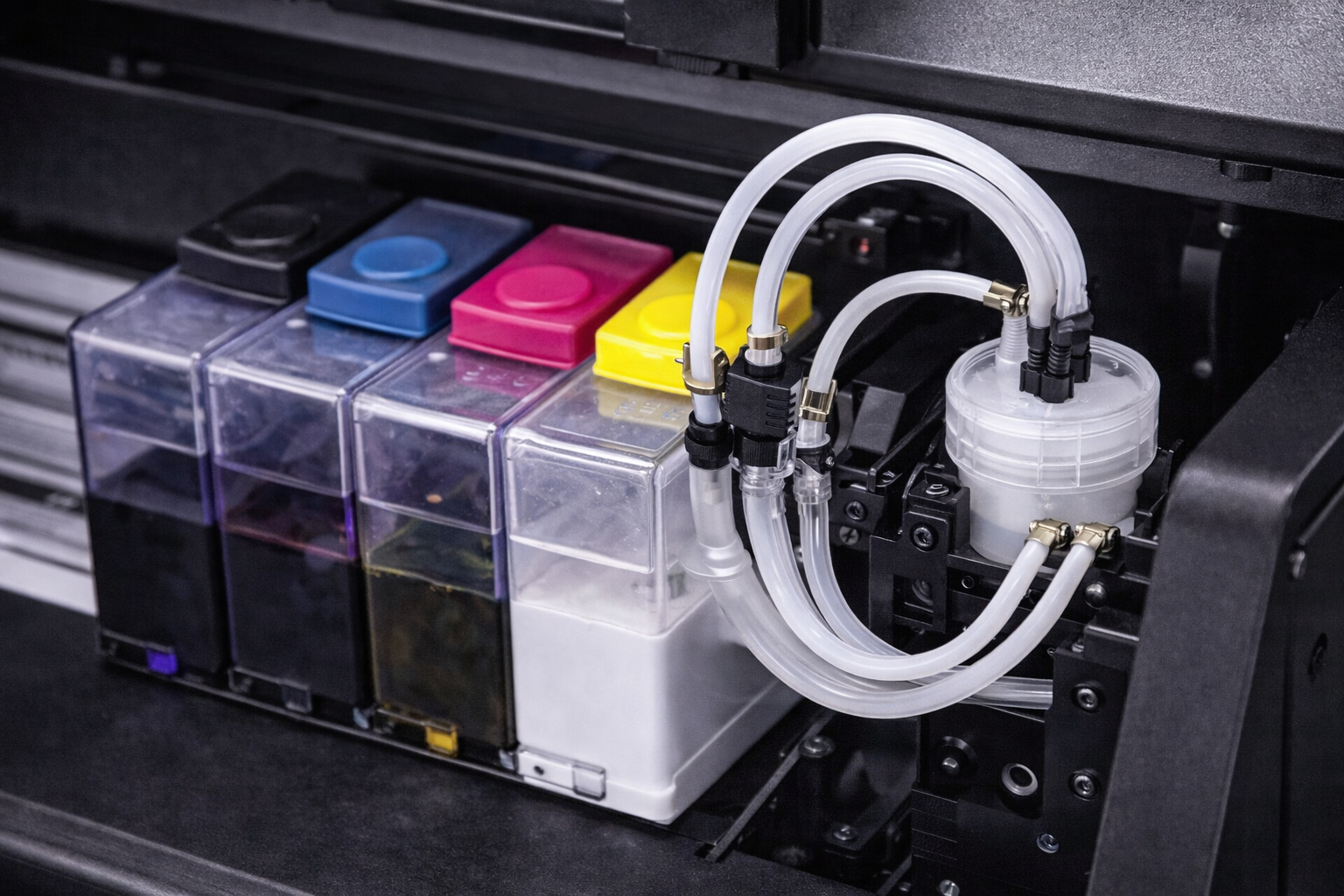
Why UV DTF Transfers Fit Glass and Cosmetic Products
Glass cups and cosmetic bottles have two things in common: they look premium, and they are often ordered in small or changing batches. A cosmetic brand may need sample bottles before launching a product line. A gift seller may need different names, monograms, seasonal graphics, or event logos. A candle maker may want a label that looks more premium than paper but does not require high minimum quantities.
UV DTF transfers help because the design can be produced separately from the product. The operator can print several designs on film, store them briefly, and apply them when the product is ready. This is useful when the object is curved, slightly irregular, already filled, too awkward for flatbed placement, or ordered in many small design variations.
For SEO and authority building, this topic supports both the UV DTF printer page and the existing UV DTF printer for stickers and product labels guide. The intent is narrower: glass cups, cosmetic bottles, and premium hard-surface packaging.
What UV DTF Transfers Are Best For
UV DTF is not a magic replacement for every decorating method. It is best when the customer wants full-color hard-surface decoration, lower minimum quantities, fast artwork changes, and a raised glossy feel. It is less ideal when the product will be heavily scraped, washed aggressively every day, or exposed to harsh chemicals without testing.
- Glass cups, tumblers, jars, candle containers, and drinkware accents.
- Cosmetic bottles, lotion bottles, perfume boxes, caps, tubes, and sample packaging.
- Acrylic keychains, retail tags, product display labels, and brand stickers.
- Phone cases, notebook covers, gift boxes, rigid packaging, and hard promotional items.
- Short-run product labels where paper or vinyl does not feel premium enough.
- Foil-accented logos and decorative labels when paired with the right workflow.
If the product is flat and the shop wants the ink directly bonded to the surface, a standard UV printer may still be the better answer. If the product is a mixed group of bottles, jars, lids, cups, and curved surfaces, UV DTF may be easier to scale.
How the Film Workflow Works
The common UV DTF process uses an A film and B film system. The design is printed on the release film, the adhesive layer is laminated, and the finished transfer is applied to the object. The exact machine, film, ink, lamination pressure, and curing settings vary, but the production logic is consistent.
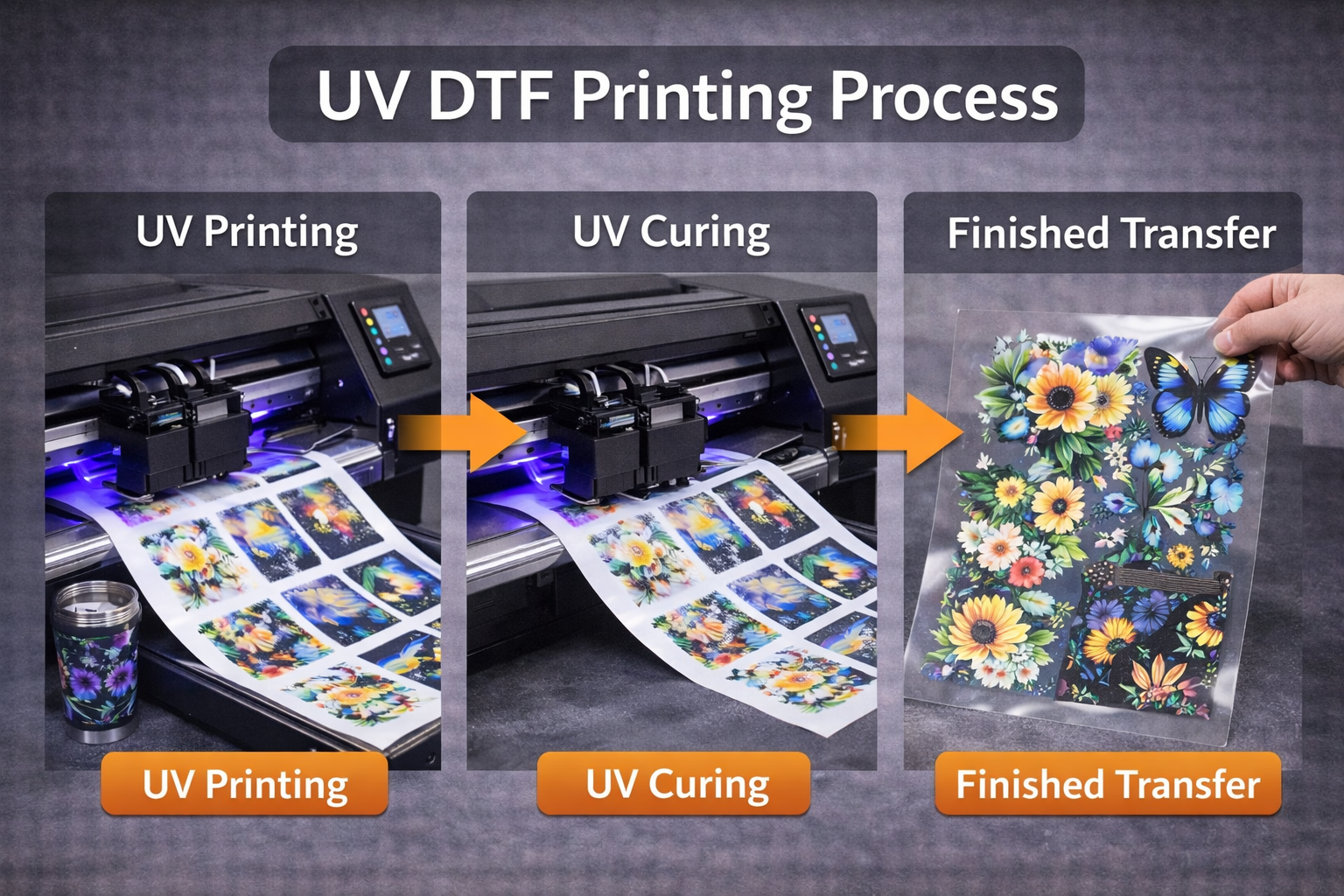
Step-by-Step Production Flow
- Prepare the design with clean edges, suitable size, correct color mode, and enough spacing between transfers.
- Print the design on the UV DTF film with CMYK, white, and varnish layers as required.
- Laminate with the adhesive film at the correct pressure and speed.
- Cut or trim the transfer sheet so operators can apply each design cleanly.
- Clean the glass, bottle, or hard surface before application.
- Apply the transfer with even pressure from one side to the other.
- Peel carefully and inspect for lifting edges, bubbles, dust, or weak adhesion.
A shop that wants repeat orders should document film brand, print speed, curing setup, lamination temperature or pressure, material type, and application notes. This helps when the same cosmetic brand asks for another batch three months later.
Glass Cups: What to Watch
Glass is attractive but unforgiving. Dust, fingerprints, curve tension, and cleaning residue can all cause application issues. The best practice is to clean the surface, apply in a stable room temperature, avoid touching the adhesive side, and test the exact cup style before selling volume orders.
For glass cups, the most common problems are lifting edges, bubbles, crooked placement, and overpromising dishwasher durability. UV DTF transfers can perform well for decorative and promotional drinkware, but sellers should be honest about care instructions. If a buyer expects heavy restaurant washing, the shop should run wash testing before making durability claims.
Cosmetic Bottles and Premium Packaging
Cosmetic packaging is one of the best UV DTF opportunities because buyers care about appearance, small quantities, and quick sample changes. A brand may test multiple label versions before finalizing a line. UV DTF lets the shop produce a premium-looking sample without ordering thousands of screen-printed bottles.
However, cosmetic bottles also introduce practical concerns. Oils, lotions, alcohol-based formulas, and handling can affect the surface. Before quoting volume work, test the transfer against the actual bottle material and expected product exposure. For premium brands, align the label edge, vertical centerline, and logo placement carefully. A slightly crooked transfer looks cheap on a high-end bottle.
Cost Factors That Matter
UV DTF pricing should not be based only on film area. A real quote should include design setup, nesting, film waste, ink and varnish usage, lamination, trimming, application labor, failed pieces, packaging, and customer revision time. Small transfers can still take meaningful labor if they require careful placement.
| Cost Factor | Why It Matters | Pricing Note |
|---|---|---|
| Film and adhesive | Every transfer consumes A/B film, even when the design is small. | Charge for sheet usage and waste, not only visible ink area. |
| Ink, white, and varnish | Raised effects and white backing improve appearance but increase cost. | Use standard presets for economy, premium, and varnish-heavy work. |
| Application labor | Manual placement controls quality on glass and bottles. | Higher-value cosmetic packaging should include labor in the quote. |
| Testing and rejects | Some surfaces need trial pieces before approval. | Build sample testing into new-customer pricing. |
| Artwork changes | Variable names or batch-specific graphics increase prepress time. | Use setup fees for frequent artwork changes. |
The best UV DTF printer for small business guide is useful for buyers who are still comparing entry-level production volume, while this article focuses on the specific glass and cosmetic-product workflow.
Storage and Fulfillment Workflow
One advantage of UV DTF transfers is that the transfer can be produced before the final product is decorated. That makes fulfillment easier for sellers who run online stores, seasonal collections, and personalized batches. However, transfers should still be handled carefully. Keep sheets flat, clean, and protected from dust, moisture, and heat. Do not leave trimmed transfers loose on a work table where the adhesive side can pick up debris.
For a small shop, create a simple storage system: printed transfer sheets in labeled folders, customer names on batch sleeves, order numbers on the backer sheet, and a job note that records film type, print mode, lamination settings, and application instructions. If the shop sells popular glass cup designs, keep best-selling transfers organized by size and collection. This reduces turnaround time while still allowing customization.
Fulfillment should also include a final inspection step. Check that the transfer matches the order, the placement is straight, the surface is clean, and no edge is lifting. For cosmetic packaging, inspect the label under bright light because small alignment errors are easy to see on premium bottles. For glass cups, inspect the curve and seam area after peeling.
How to Sell UV DTF Samples to Brands
UV DTF transfers are especially useful for sample-driven sales. A cosmetic founder, candle maker, cafe owner, or event planner may not order 500 pieces immediately. They may want to see three label styles, two logo sizes, and one premium finish before choosing. A shop can sell a paid sample kit instead of giving away free design time.
A practical sample offer could include three glass cup transfers, three cosmetic bottle label sizes, one foil-accented sample, and a small care card. Link this offer to the UV DTF foil stamping workflow page when the buyer wants premium effects. The sales message should focus on fast product testing: “Approve your bottle label or glass cup design before ordering the full batch.”
This approach is stronger than selling only by square inch. It packages UV DTF as a product-development service for brands. That makes the workflow more valuable and helps the shop win repeat orders when the customer launches a new scent, drinkware collection, or retail campaign.
Questions to Ask Before Accepting a Glass or Bottle Transfer Order
Before quoting, ask what the product is made from, whether it is coated, whether it will be washed, whether it will touch oils, alcohol, lotions, or candles, and how the customer plans to use it. Ask if the item is for retail sale, event gifting, product sampling, or personal use. A decorative event glass and a cosmetic bottle sold in stores may require different testing and inspection standards.
Also ask whether the customer wants the transfer applied by your shop or supplied as a ready-to-apply decal. Applied products need labor, placement control, and packaging. Loose transfers need instructions and may create risk if the buyer applies them incorrectly. Clear quoting protects both sides and makes the job easier to repeat.
Durability Expectations
Durability depends on the surface, cleaning, application pressure, film quality, ink quality, and end use. UV DTF transfers are generally strong for decorative hard surfaces, promotional products, indoor packaging, retail samples, and custom gifts. They should still be tested when the product will face water, alcohol, oils, abrasion, heat, outdoor exposure, or repeated washing.
Shops should create honest care instructions. For glass drinkware, recommend gentle hand washing unless the shop has tested a specific dishwasher process. For cosmetic packaging, test exposure to the product formula and normal handling. For retail display labels, test edge lift after rubbing and cleaning.
Direct UV Printing vs UV DTF Transfers
Direct UV printing and UV DTF transfers both have a place. Direct UV is usually stronger when the object is flat, the surface is compatible, and the shop wants ink directly cured on the material. UV DTF is more flexible when the shop handles small mixed objects, curved packaging, awkward shapes, and designs that change often.
| Situation | Better Fit | Reason |
|---|---|---|
| Flat acrylic signs or panels | Direct UV printer | Stable bed placement and direct ink bonding are efficient. |
| Glass cups with many design variations | UV DTF transfer workflow | Transfers can be printed in batches and applied as orders arrive. |
| Cosmetic bottle samples | UV DTF transfer workflow | Good for small runs, mockups, and fast design changes. |
| High-volume cylindrical drinkware | Dedicated 360 rotary UV printer | Direct rotary printing is stronger for repeat volume on round products. |
| Foil-style accents | UV DTF with foil stamping workflow | Adds premium decorative effect for labels and packaging. |
For buyers comparing both routes, the UV printer vs UV DTF printer article can help decide which workflow belongs in the shop first.
Machine Features to Compare
A UV DTF printer used for glass cups and cosmetic bottles should be judged by more than headline width. Buyers should compare print stability, white ink circulation, varnish consistency, lamination integration, film compatibility, maintenance access, software workflow, and after-sales support. A cheap machine that wastes film or needs constant adjustment can become expensive quickly.
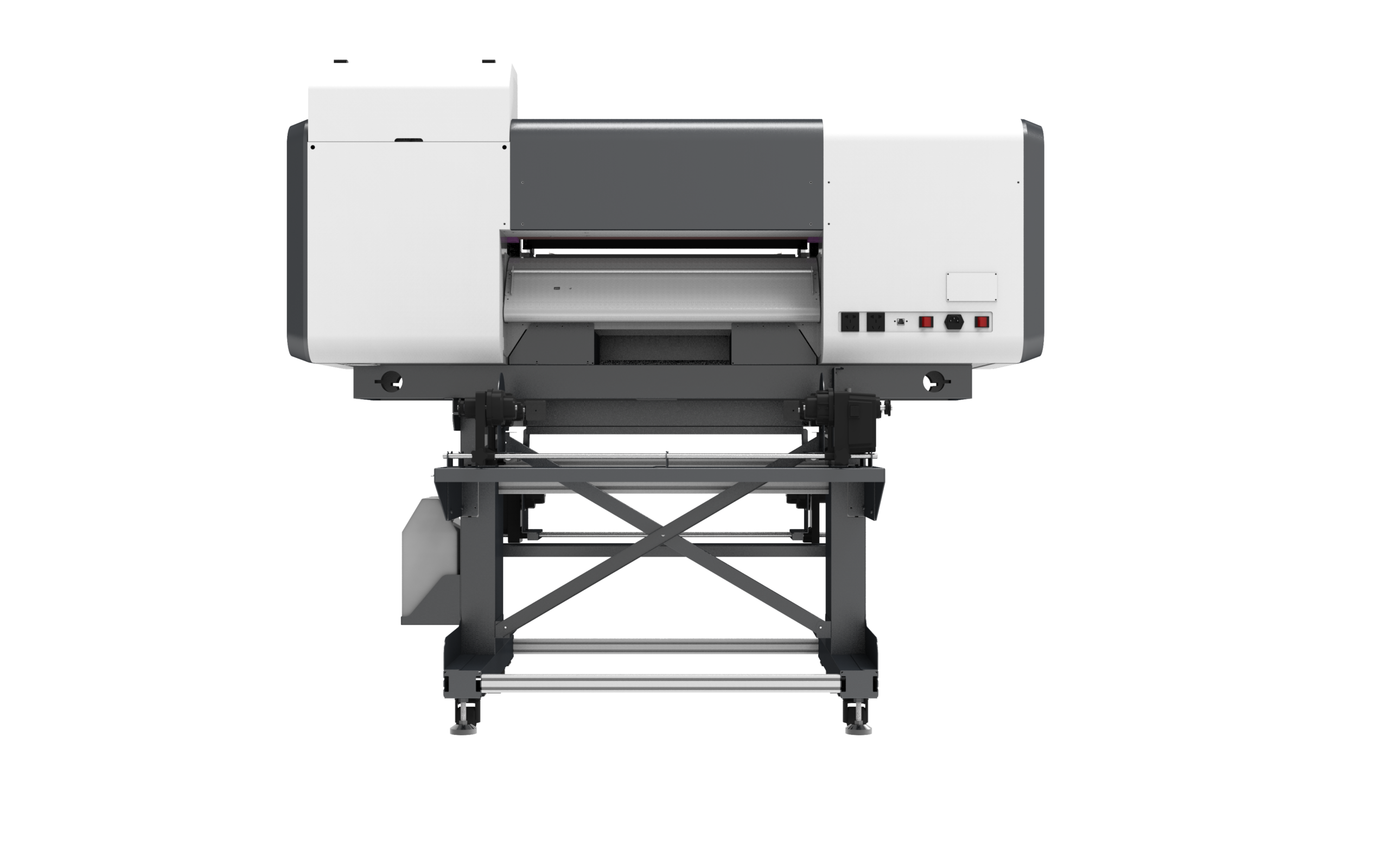
The MTuTech UV DTF printer page is the main commercial page for buyers comparing machine specifications. This support article should send qualified traffic there after explaining the use case.
Application Quality Checklist
- Clean the surface before transfer application.
- Keep hands away from the adhesive side of the transfer.
- Apply slowly from one side to reduce bubbles.
- Use a guide mark or placement jig for repeat bottle and cup orders.
- Inspect edges after peeling, especially on curved surfaces.
- Test water, rubbing, oil, and product exposure when the customer needs durability claims.
- Keep sample sheets from approved jobs for future reference.
Best Product Menu for a Small Shop
A small business should avoid selling every possible UV DTF product at once. Start with a product menu that is easy to photograph, quote, and repeat. For example: glass cup decals, candle jar labels, cosmetic bottle samples, acrylic logo labels, premium event stickers, and small brand packaging kits. Once those are stable, add seasonal designs, foil options, variable names, and sample bundles.
Good product packaging also helps SEO. A page or blog that explains glass cups, cosmetic bottles, and premium hard-surface labels can rank for more specific buyer searches than a broad UV DTF article. It can also pass internal authority to applications of UV DTF printing and the main UV DTF product page.
Common Mistakes
- Claiming dishwasher-safe performance without testing the exact cup and transfer system.
- Applying transfers over dust, oil, fingerprints, or condensation.
- Printing too many tiny details that are difficult to weed, trim, or inspect.
- Using the same pricing for easy flat labels and slow curved bottle application.
- Ignoring foil and varnish as premium upsell options.
- Confusing UV DTF with textile DTF. The UV DTF vs regular DTF guide explains the difference.
FAQ
Are UV DTF transfers good for glass cups?
Yes, they can work very well for decorative glass cups and custom drinkware, especially for short runs and personalized designs. The shop should still test washing, edge lift, and handling before making durability claims.
Can UV DTF transfers be used on cosmetic bottles?
Yes. Cosmetic bottles are one of the strongest use cases because brands often need premium small-batch samples, short runs, and fast artwork revisions. Always test against the actual bottle material and formula exposure.
Should I buy a UV DTF printer or a direct UV printer?
If most orders are hard-surface transfers, labels, glass cups, and mixed small objects, start with a UV DTF printer. If most jobs are flat boards, acrylic, metal, and panels, compare a direct UV printer.
Final Recommendation
UV DTF transfers for glass cups and cosmetic bottles are a strong niche because they combine premium appearance, short-run flexibility, and buyer-friendly customization. The workflow becomes profitable when a shop controls film handling, lamination, surface cleaning, application, and honest durability testing. For buyers ready to compare machines, the next step is to review the commercial UV DTF printer page and match machine width, film workflow, and support to the product menu they want to sell.