
Tumbler printer vs sublimation is one of the most practical comparisons for drinkware businesses. Both can decorate cups, bottles, and promotional drinkware, but they solve different production problems. Sublimation is familiar, affordable, and effective on coated white blanks. UV tumbler printing is stronger when the shop needs direct printing, dark surfaces, hard products, premium logos, white ink, varnish effects, or a broader cylindrical product range.
This guide compares the two workflows from a business point of view: material fit, startup cost, durability, full-wrap control, artwork setup, production speed, pricing, and when a shop should move from sublimation into a tumbler printer or 360 rotary UV printer workflow.
Quick Answer
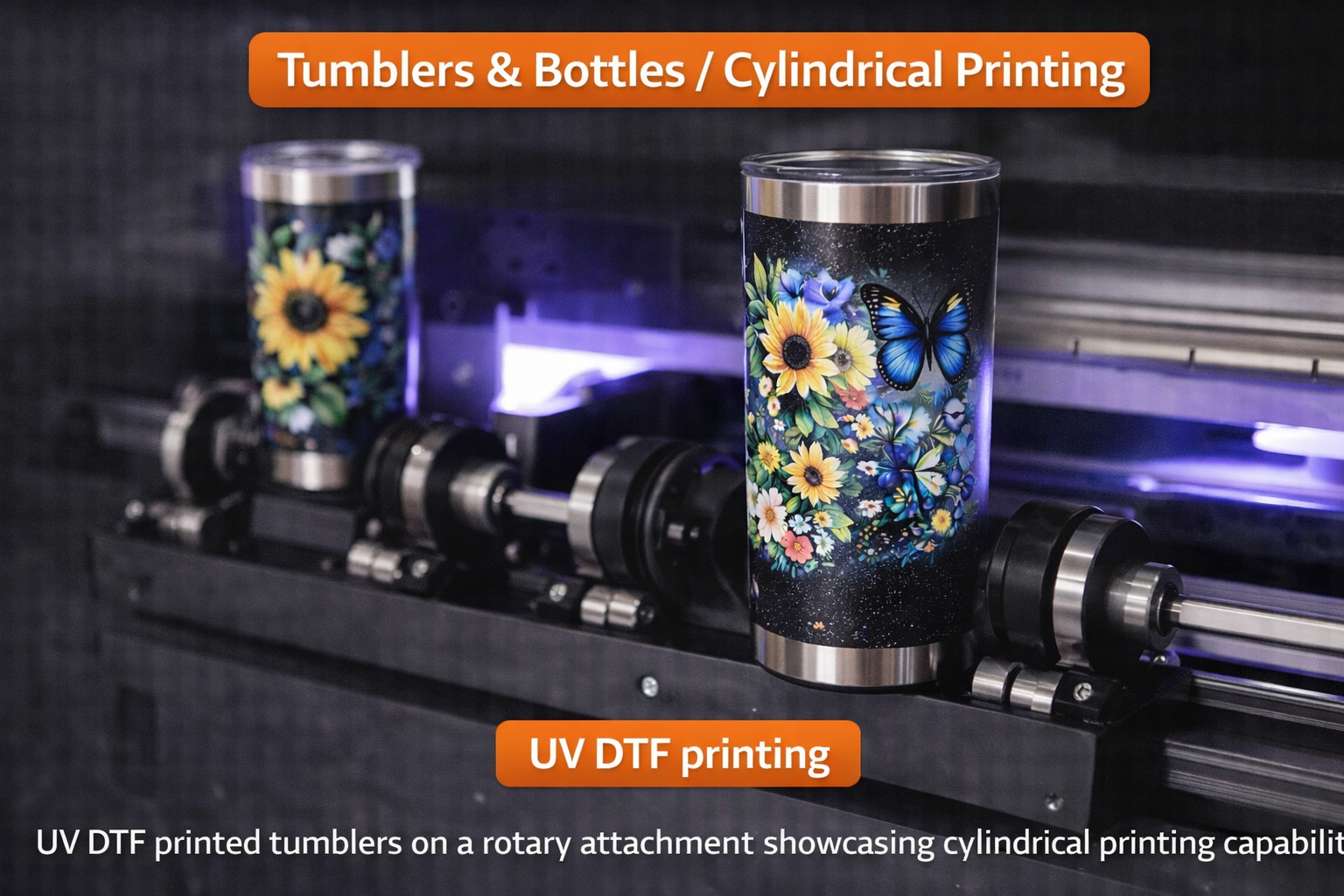
Sublimation is a good entry workflow when you mainly print white or light polymer-coated tumblers, mugs, and drinkware with full-color designs. A UV tumbler printer is the stronger choice when you need to print on darker items, coated metal, glass, plastic, bottles, cosmetic containers, premium logos, short-run commercial branding, and cylindrical products beyond standard sublimation blanks.
The best choice is not about which method sounds more advanced. It is about which workflow fits the products customers actually buy from you. A wedding tumbler shop, a corporate gift supplier, a cosmetic bottle decorator, and a drinkware factory may need different equipment.
How Sublimation Drinkware Printing Works
Sublimation uses heat to turn dye into gas so it bonds into a polymer coating. It works beautifully on suitable coated blanks, especially white or light-colored drinkware. The process is popular because startup costs can be low, online blank supply is wide, and many designs can be produced with a printer, transfer paper, heat tape, and a heat press or tumbler press.
The limitation is material dependency. Sublimation does not bond directly to ordinary stainless steel, glass, uncoated plastic, raw ceramic, or dark surfaces without special coatings. It also cannot print opaque white because sublimation inks are dye-based. If the product is not sublimation-ready, the workflow breaks down or requires a coated blank.
How a UV Tumbler Printer Works
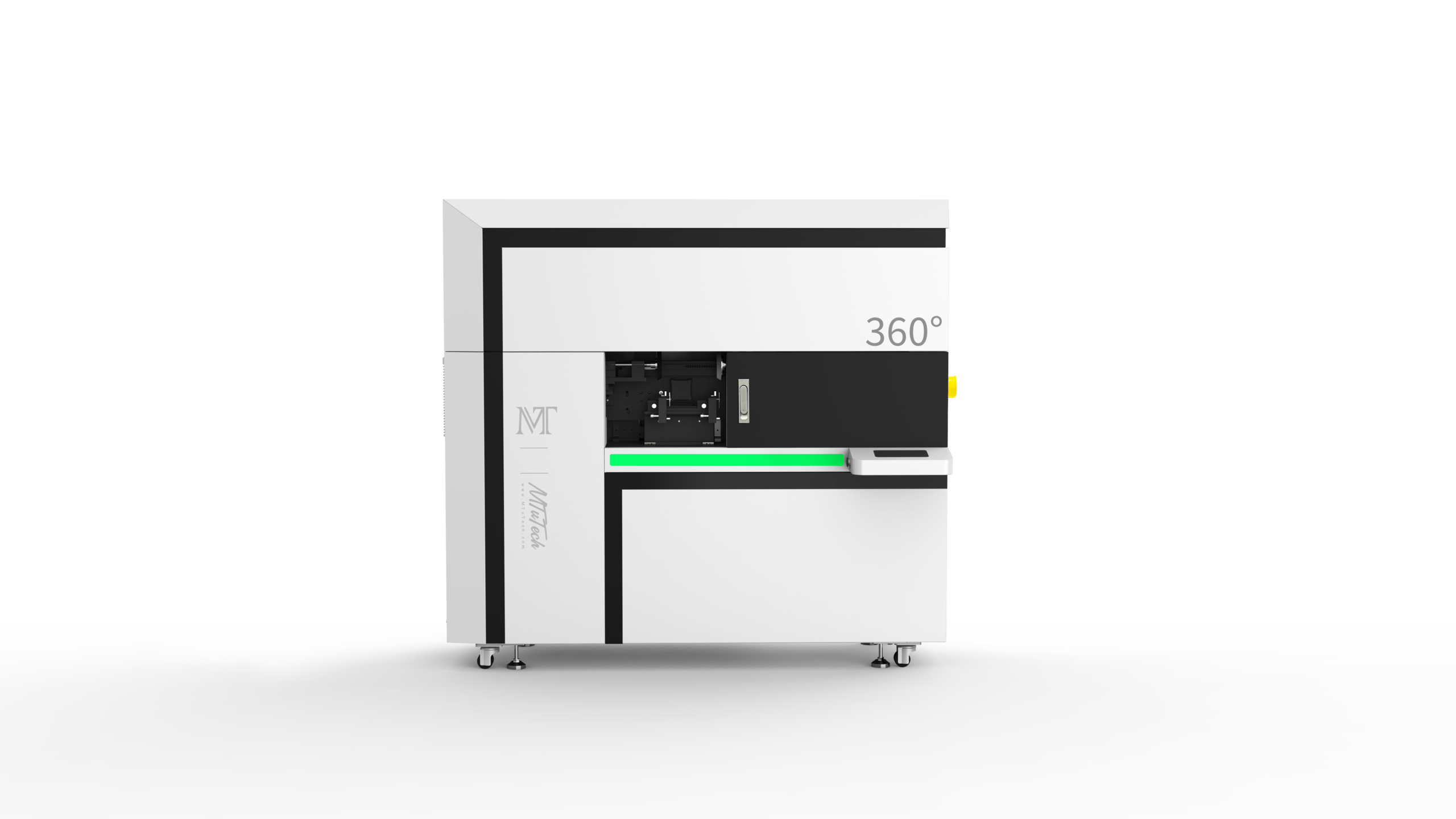
A UV tumbler printer prints ink onto the drinkware surface and cures it with UV light. Depending on the machine, the object rotates while the printhead applies ink around the cylinder. A 360 rotary UV printer is built for this kind of round-object handling. The workflow can support color, white ink, varnish, and more surface types than sublimation when tested correctly.
UV printing still needs surface preparation and fixture control. The product must rotate accurately, the surface must accept ink, curing must be correct, and artwork must account for circumference and seam position. But the upside is a broader commercial product range.
Tumbler Printer vs Sublimation: Main Differences
| Factor | UV tumbler printer | Sublimation |
|---|---|---|
| Surface range | Coated metal, glass, plastic, bottles, tumblers, selected hard products | Mostly sublimation-coated white or light blanks |
| White ink | Available on suitable UV systems | Not available in standard sublimation |
| Dark products | Possible with white underbase and tested adhesion | Limited unless using special coated blanks |
| Startup cost | Higher equipment and training cost | Lower entry cost |
| Commercial finish | Direct print, premium logo, varnish/texture options | Strong full-color wrap on compatible blanks |
| Product variety | Broader cylindrical product and hard-surface options | Best for coated drinkware and gift blanks |
Which Workflow Has Better Durability?
Durability depends on the surface, coating, ink, curing, handling, and customer use. Sublimation can be highly durable on proper coated blanks because the dye becomes part of the coating. Poor blanks, uneven heat, or weak coatings create fading and wash issues. UV printing can also be durable when adhesion and curing are correct, but it sits as a cured layer on the surface, so scratch and wash testing are important.
Do not judge durability from one perfect sample. Test the actual blank, coating, wash method, handling, and packing conditions. Corporate drinkware, gym bottles, cosmetic containers, and retail products all face different real-world stress.
When Sublimation Is the Better Choice
Sublimation is often better for beginners, small gift shops, and sellers focused on white or light-coated tumblers with colorful wraps. It has a lower entry cost and a wide ecosystem of blanks, templates, papers, and tutorials. If the business sells personalized designs on standard sublimation tumblers, it can be a profitable and simple starting point.
- You mainly sell white or light sublimation-ready tumblers.
- Your customers want full-color all-over artwork.
- You need a lower-cost entry workflow.
- Your product catalog is built around standard coated blanks.
- You do not need white ink, varnish, direct glass printing, or dark-surface printing.
When a UV Tumbler Printer Is the Better Choice
A UV tumbler printer is better when the business needs a more commercial and flexible decoration workflow. It can support premium logos, variable brand runs, dark bottles, coated metal, glass, plastic, cylindrical packaging, and mixed product lines. It is especially useful for corporate gifting, promotional product suppliers, cosmetic packaging teams, and shops that want to move beyond standard coated blanks.
- You need to print on dark, metallic, clear, or non-standard surfaces.
- You sell company logos, short-run branding, packaging, or premium merchandise.
- You want white ink, varnish, raised effects, or selective print zones.
- You handle bottles, jars, cups, tubes, and cylindrical containers, not only tumblers.
- You need a workflow that connects to broader product pages such as cylinder UV printer and cylindrical printer.
Full-Wrap Printing and Seam Control
Both workflows can produce full-wrap designs, but they handle seams differently. Sublimation wraps transfer paper around the tumbler and uses heat/pressure to transfer the image. Seam quality depends on paper alignment, pressure, heat, and blank quality. UV rotary printing prints while the object rotates, so seam control depends on machine calibration, artwork circumference, fixture setup, and product geometry.
Straight cylinders are easier than tapered cups. If your products include conical tumblers, tapered bottles, or irregular drinkware, read the printer for conical surfaces guide before promising perfect full wraps. Taper changes artwork behavior and can create seam mismatch if it is ignored.
Artwork Setup: Sublimation vs UV
Sublimation artwork is usually built as a wrap template with bleed and seam allowance. The design transfers onto a coated blank, so the background color of the blank matters. White areas in the design usually come from the white blank, not from white ink.
UV artwork can be built for full wraps, spot logos, white underbase, varnish, raised areas, and selective print zones. A black stainless tumbler may need white behind the logo. A clear bottle may need reverse or layered planning. A metallic bottle may use selective white so the metal remains visible in parts of the design.
Cost and ROI Comparison
Sublimation has lower startup cost, but the business may be limited by blank type and price competition. Many sellers use similar blanks and designs, so differentiation can be difficult unless the brand, design quality, or local sales channel is strong.
A UV tumbler printer costs more, but it can open higher-value commercial work. Corporate branding, short-run product samples, cosmetic packaging, drinkware logos, and mixed cylindrical products may carry stronger margins than standard personalized tumblers. Buyers should compare monthly profit potential, not just machine price.
For rotary UV planning, the 360 rotary UV printer price guide is a useful support article because it covers machine cost, fixtures, ink, training, and ROI.
Production Speed and Labor
Sublimation can be efficient for batches of similar blanks when the operator has good templates and a reliable press. However, taping, wrapping, pressing, cooling, and removing paper all take labor. Multiple presses may be needed for higher volume.
UV tumbler printing requires setup, fixture alignment, nozzle checks, surface cleaning, and test prints. Once dialed in, it can be efficient for repeat commercial SKUs. The key is repeatability. If every bottle is a new size and shape, setup time rises. If the shop sells a small set of standard products, production becomes easier to control.
Product Menu Ideas for Each Workflow
Sublimation Product Menu
- Personalized white tumblers for gifts, weddings, and events.
- Photo mugs and coated drinkware blanks.
- Full-color seasonal designs and ecommerce gift products.
- Low-volume custom drinkware where coated blanks are acceptable.
UV Tumbler Printer Product Menu
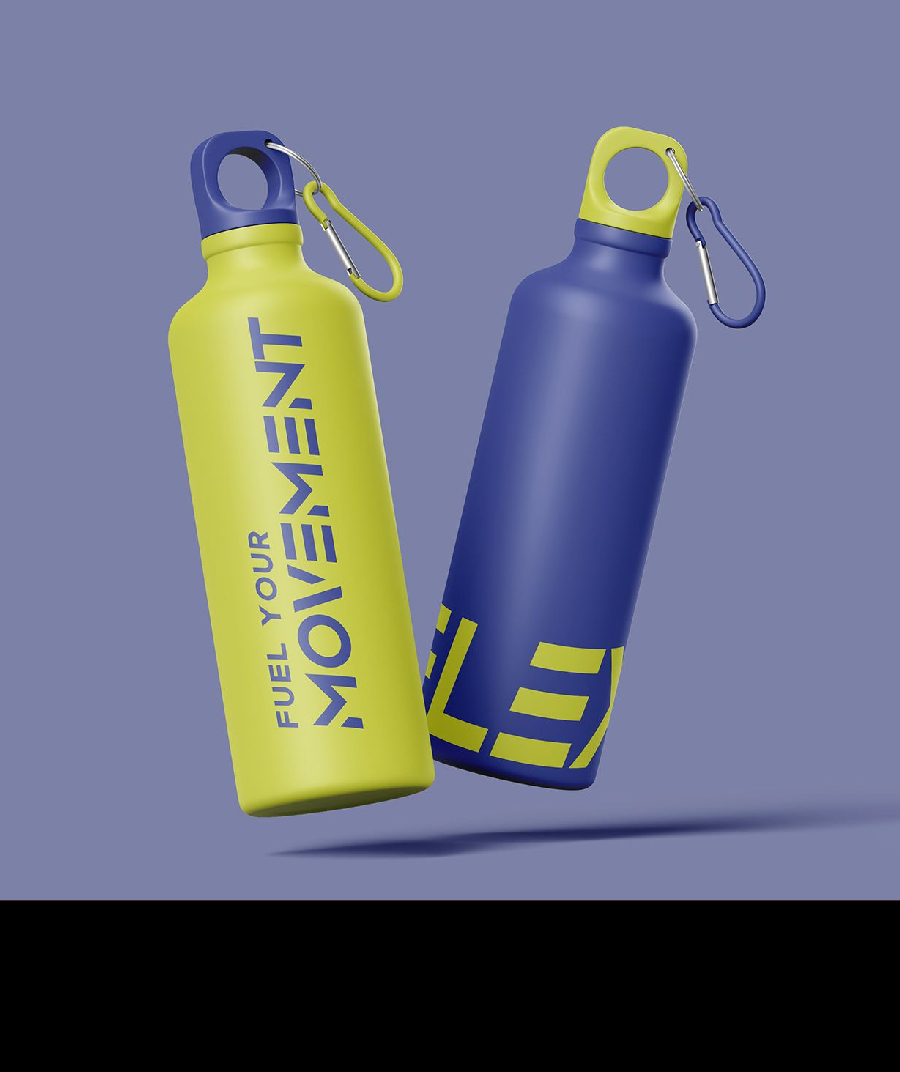
- Corporate branded stainless bottles and premium drinkware.
- Dark tumbler logos with white ink underbase.
- Cosmetic tubes, jars, bottles, and short-run packaging.
- Glass bottles, plastic containers, and cylindrical product samples.
- Promotional drinkware and product launch kits.
Buyer Scenarios: Which Workflow Fits Which Business?
A home-based gift seller may start with sublimation because the equipment cost is manageable and coated blanks are easy to buy. That seller can learn design, customer service, packing, and ecommerce without taking on a larger equipment purchase immediately. If the catalog remains focused on white tumblers and photo mugs, sublimation may continue to be enough.
A corporate gift supplier faces a different problem. Corporate clients often ask for logos on black bottles, metallic drinkware, glass items, sample kits, and mixed promotional products. They may not want a full-color wrap; they may want a precise logo, a white underbase, or a premium varnish accent. That is where a UV tumbler printer becomes more commercially useful.
A packaging or cosmetics team has an even broader requirement. They may need short-run bottles, jars, tubes, and containers for product launches or retail tests. Sublimation is rarely the right workflow for those materials. A rotary UV workflow or UV DTF transfer workflow can support more packaging-style products and connect better with B2B demand.
Sample Testing Before Switching Workflows
Before moving from sublimation to UV tumbler printing, test the products that matter most. Send the actual tumbler, bottle, jar, or tube to the supplier and include a difficult artwork file. The file should include small text, a logo, a solid color, a white ink area, and any wrap requirement. Ask for more than one sample if repeatability matters.
Evaluate the sample after handling, packing, light rubbing, and cleaning. Look at seam control, color density, white ink opacity, edge sharpness, and whether the print sits where the customer expects it. This prevents the business from buying a machine based on a showroom product that does not match its real catalog.
Scaling From Hobby Orders to Commercial Drinkware
The biggest shift from hobby drinkware to commercial drinkware is process discipline. A hobby seller can adjust each order manually. A commercial shop needs saved templates, product codes, repeatable fixtures, clear pricing, quality checks, and predictable lead times. The equipment matters, but the production system around it matters just as much.
For UV tumbler printing, save circumference, printable height, seam position, fixture setup, print mode, curing setting, and customer approval notes for every repeat product. When a client reorders 300 bottles after a successful event, the second order should be easier than the first. That is where margin improves.
Common Buying Mistakes
Choosing Only by Startup Cost
Lower startup cost is useful, but it does not guarantee better profit. Choose by product demand and margin.
Assuming One Workflow Prints Every Tumbler
Sublimation needs coated blanks. UV printing needs surface testing and rotation control. Neither method removes all limitations.
Ignoring Product Shape
Straight tumblers are easier than tapered cups, bottles with shoulders, handled mugs, or uneven containers.
Underpricing Setup and Testing
Both workflows need file prep, sample testing, packing, and rejects. Price the full process, not only ink or blank cost.
How to Decide in 30 Minutes
- List your top five drinkware products by expected monthly demand.
- Write each material and surface: coated white, powder-coated metal, glass, plastic, clear, dark, or tapered.
- Mark whether each design needs full wrap, spot logo, white ink, varnish, or variable names.
- Estimate selling price, blank cost, labor, reject rate, and setup time.
- Choose the workflow that supports the most profitable repeat products, not the widest theoretical range.
If the product list is mostly coated white tumblers, sublimation may be the practical starting point. If the list includes corporate bottles, dark surfaces, glass, packaging, and mixed cylindrical products, a UV tumbler printer deserves stronger consideration.
Internal Buyer Path on MTuTechPrinter
This article supports the main tumbler printer page and routes readers to related commercial pages such as 360 rotary UV printer, cylinder UV printer, and cylindrical printer. It also supports the existing UV bottle printing machine guide and UV vs DTF for tumblers article for visitors comparing drinkware decoration methods.
That internal linking structure helps Google see a complete drinkware printing cluster instead of one isolated product page. The article captures comparison intent, then pushes qualified buyers toward the correct commercial machine page.
FAQ
Is a UV tumbler printer better than sublimation?
It is better when you need darker products, white ink, direct printing, glass, metal, plastic, bottles, or premium commercial branding. Sublimation is better for coated white blanks and lower startup cost.
Can sublimation print on stainless steel tumblers?
Only if the tumbler has a sublimation-ready coating. Standard raw or powder-coated stainless steel will not work like a coated sublimation blank.
Can a UV tumbler printer print full wraps?
Yes, with the right rotary setup, artwork, and product geometry. Straight cylinders are easier than tapered or irregular products.
Which MTuTech page should drinkware buyers start with?
Start with the tumbler printer page, then compare the 360 rotary UV printer and related cylinder UV printer options for broader cylindrical production.
Bottom line: sublimation is a strong entry workflow for coated blanks, while a UV tumbler printer is a stronger commercial path for broader materials, premium branding, and cylindrical product variety. The best choice is the one that fits repeat customer demand and creates enough margin to justify the workflow.