
Round-product printing has several overlapping search terms: cylinder UV printer, cylindrical printer, tumbler printer, bottle printer, cup printer, and 360 rotary UV printer. Buyers often use these terms as if they mean the same thing, but the intent behind them can be different. A drinkware seller searching for a tumbler printer may not need the same machine as a packaging supplier searching for a cylinder UV printer. A startup looking for a compact cylindrical printer may not need the same workflow as a high-output bottle decoration shop.
This overlap matters for both buyers and SEO. From a buyer perspective, choosing the wrong machine can create fixture problems, slow production, or poor alignment on the products that matter most. From an SEO perspective, too many pages targeting the same round-product terms can confuse Google about which URL should rank. The solution is not to avoid the terms. The solution is to define each one clearly and link each article to the correct commercial page.
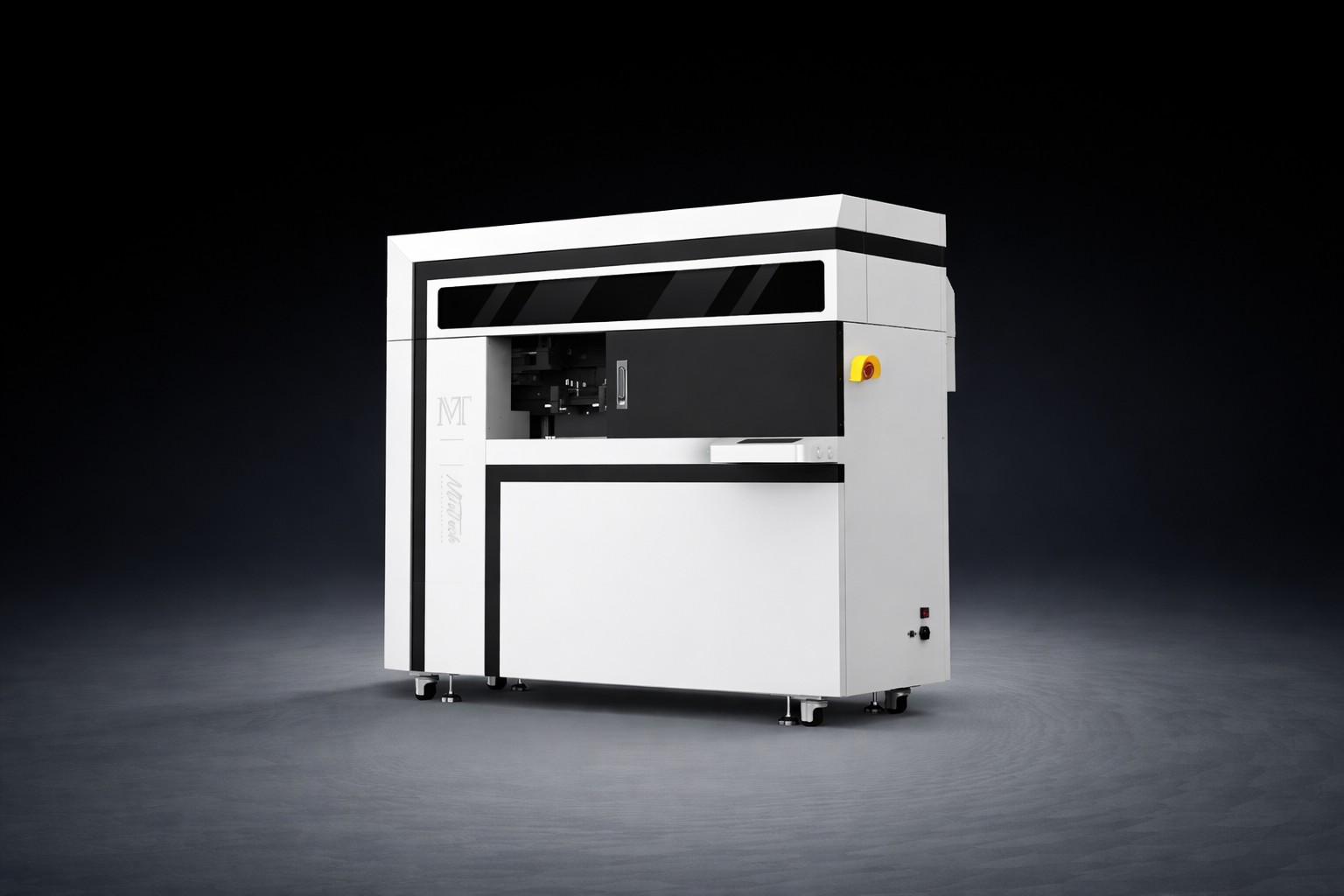
This guide compares the cylinder UV printer, cylindrical printer, tumbler printer, and 360 rotary UV printer options on MTuTechprinter.com. It is designed to help buyers understand which page and which machine direction fits their products.
Why These Terms Get Confused
The confusion starts because all of these machines deal with curved or round products. A tumbler is cylindrical. A bottle is cylindrical. A can is cylindrical. A cup may be tapered. A cylinder UV printer may use rotary movement. A 360 rotary UV printer may print full-wrap artwork around a cylinder. From the outside, the machines sound similar.
But buyers do not all want the same outcome. Some want personalized drinkware. Some want full-wrap packaging. Some want a compact printer for startup product decoration. Some want industrial output with stable registration. Some only need logos on one side of a bottle. Others need artwork that wraps around the full circumference. Those differences should guide the machine choice.
Simple way to separate the terms
- Cylinder UV printer: broad commercial term for printing directly on cylindrical objects.
- Cylindrical printer: often used by buyers looking for compact or category-level round-product printing options.
- Tumbler printer: drinkware-specific intent for cups, mugs, bottles, and insulated tumblers.
- 360 rotary UV printer: production-focused intent for full-wrap printing with controlled rotation.
These are not strict dictionary definitions. They are practical SEO and buying definitions. When the site uses them consistently, each page can speak to a different buyer need instead of fighting for the same keyword.
What a Cylinder UV Printer Is Best For
A cylinder UV printer is the broadest commercial phrase in this group. Buyers searching this term usually want a machine that can print on cylindrical products such as bottles, cans, cups, cosmetic containers, tubes, and round promotional items. They may not yet know whether they need a dedicated rotary machine, a compact cylindrical printer, or a tumbler-focused setup.
The MTuTech cylinder UV printer page should therefore carry the broad commercial intent. It can introduce the machine family, explain core applications, and guide buyers toward the right product path. A blog like this should support that page by clarifying the decision process, not replace it.
Good fit for cylinder UV printer intent
- Buyers printing many types of round products.
- Factories that need branding or markings on cylindrical components.
- Packaging suppliers printing tubes, jars, cans, or containers.
- Print shops that need flexibility beyond only tumblers.
- Teams comparing rotary UV, flatbed attachments, and dedicated cylinder systems.
If the product mix includes several round-object categories, start with the cylinder UV printer page. If the product mix is almost entirely drinkware, the tumbler printer page may speak more directly to the buyer’s needs. If the buyer needs full-wrap production control, the 360 rotary UV printer page becomes more relevant.
What a Cylindrical Printer Is Best For
The term cylindrical printer often attracts buyers at an earlier research stage. They may be looking for a machine that can print on round products, but they may also care about budget, footprint, ease of use, and startup-friendly workflows. The recently improved Cylindrical Printer page is useful for this intent because it can position the machine as a practical option for startups and small production teams.
Cylindrical printer content should avoid trying to own every possible round-product keyword. Instead, it should explain the category and help buyers decide whether they need a compact machine, a specialized tumbler printer, or a more industrial rotary UV printer. This lowers cannibalization risk and gives users a better path.
Good fit for cylindrical printer intent
- Startup product decorators entering round-object printing.
- Small shops comparing compact machines before buying.
- Businesses that print mixed cylindrical items in lower volumes.
- Buyers who need a simpler entry point before scaling production.
- Teams evaluating whether round-product UV printing fits their business.
A cylindrical printer can be the right choice when product variety is high but production volume is still moderate. If the business later grows into higher drinkware demand, it may add a more dedicated tumbler or rotary workflow.
What a Tumbler Printer Is Best For
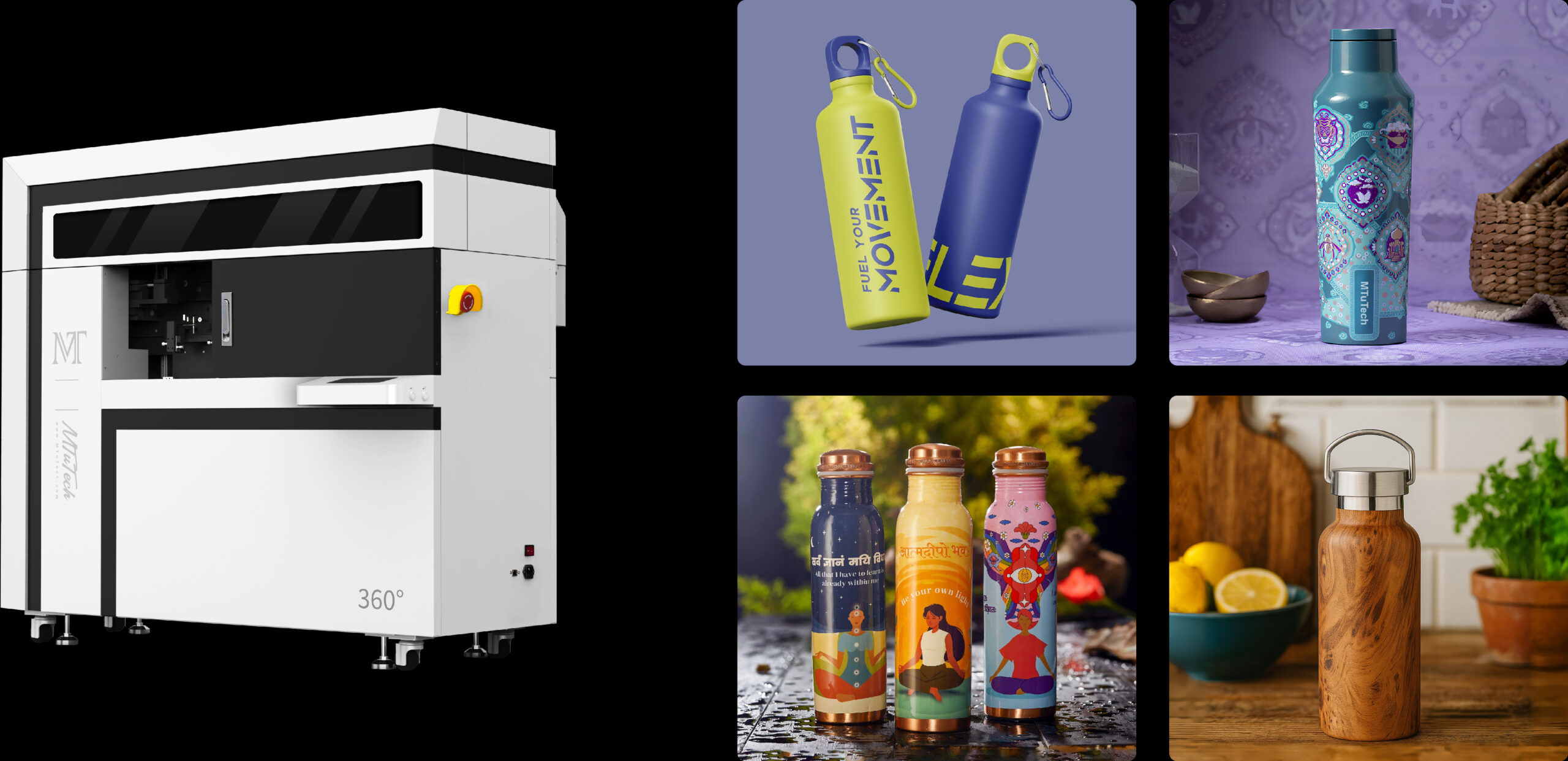
A tumbler printer is the clearest term for drinkware buyers. Someone searching for this phrase usually wants to print insulated tumblers, cups, mugs, bottles, and drinkware blanks. Their concerns are not only technical. They want to know whether the machine can produce attractive products customers will actually buy. They care about full-wrap designs, small text, logos, color on dark drinkware, personalization, order turnaround, and finish durability.
The MTuTech Tumbler Printer page should own drinkware-specific buyer intent. It should not be forced to rank for every cylindrical product. A tumbler printer article can mention bottles and cups, but its main promise should stay focused on drinkware and custom cup businesses.
Good fit for tumbler printer intent
- Custom drinkware sellers and personalization shops.
- Corporate gift suppliers printing branded tumblers.
- Sports, school, event, and wedding product sellers.
- Shops comparing UV printing with sublimation or DTF for tumblers.
- Buyers who need premium full-color designs on cups and bottles.
MTuTech already has a supporting article on UV vs DTF for Tumblers. That article helps comparison-stage users understand process differences. This new guide helps them decide where the tumbler printer fits compared with broader cylinder and rotary UV options.
What a 360 Rotary UV Printer Is Best For
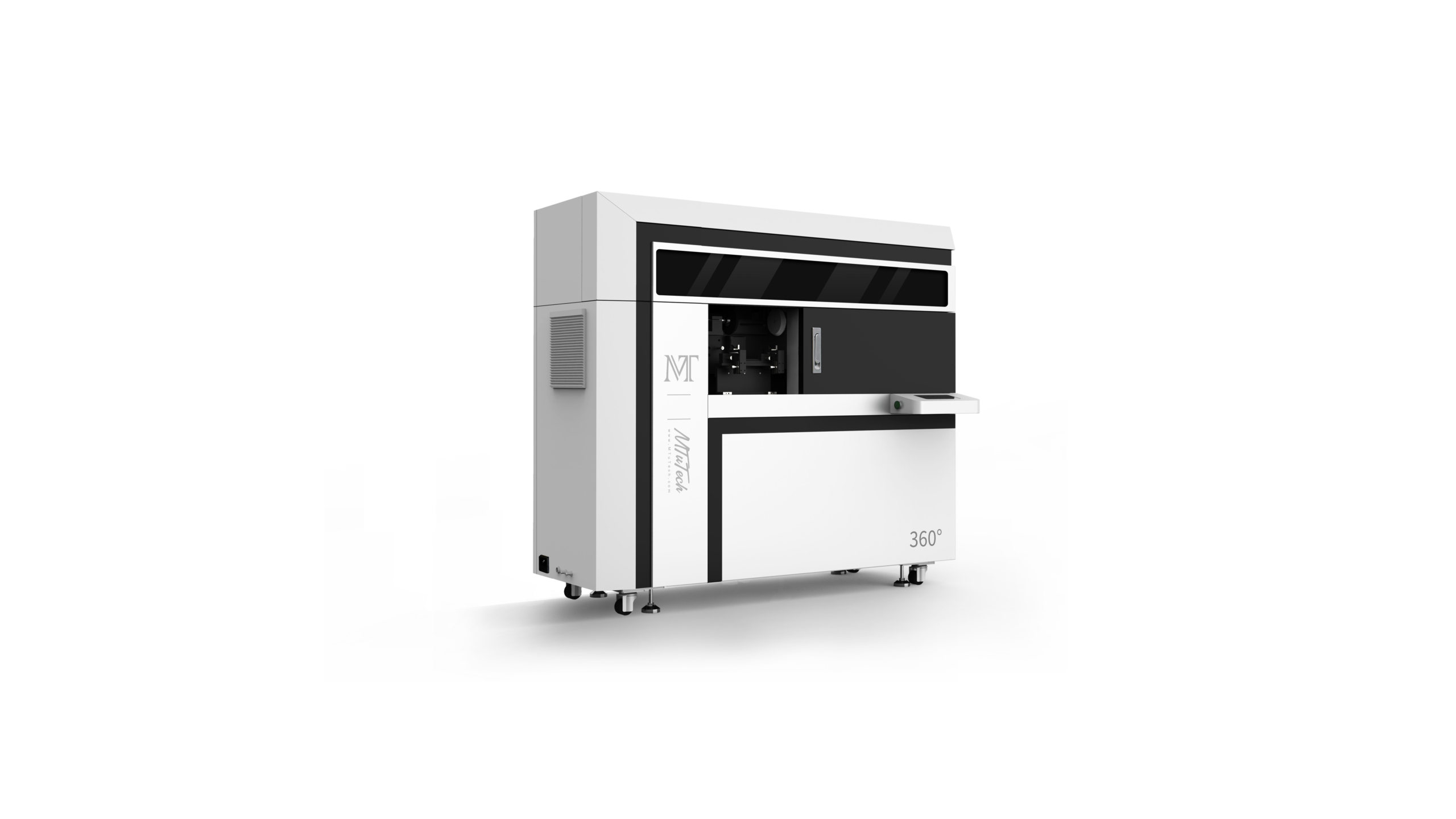
A 360 rotary UV printer is best when the buyer cares about full-wrap control and repeatable production on round products. It is not only for tumblers. It can support bottles, cans, cosmetic packaging, paper tubes, cylindrical containers, and some industrial parts. The key idea is rotation. The object turns while the printer lays down the image, so artwork, fixture, diameter, and speed all need to match.
The 360 Rotary UV Printer page should own the high-intent commercial keyword. A buyer who searches this term may already understand that rotary control is important. They may be closer to comparing machines and requesting a quote. Supporting content should therefore focus on production workflow, fixture control, seam quality, and ROI.
Good fit for 360 rotary UV printer intent
- Shops producing full-wrap artwork around round products.
- Drinkware brands with repeat orders and standard blanks.
- Packaging suppliers decorating bottles, cans, jars, and tubes.
- Businesses needing consistent alignment across batches.
- Teams that want higher production control than a simple attachment can provide.
The new production guide on 360 rotary UV printer workflow should sit next to this comparison guide in the internal link structure. One article explains which machine path fits the buyer. The other explains how to run rotary UV jobs profitably.
Comparison Table: Which Machine Path Fits Which Buyer?
| Buyer Need | Best Matching Page | Why It Fits |
|---|---|---|
| Broad round-product printing across bottles, cans, containers, and industrial parts | Cylinder UV Printer | Best broad commercial page for cylinder printing intent. |
| Startup or compact round-product printing research | Cylindrical Printer | Better for category education and smaller-shop decision making. |
| Custom cups, mugs, bottles, and drinkware products | Tumbler Printer | Best match for drinkware-specific buyer language. |
| Full-wrap bottle, tumbler, can, or packaging production | 360 Rotary UV Printer | Best fit when rotation control and repeatable wrap quality matter most. |
This table is more than a user aid. It is also an internal SEO structure. When each article uses consistent anchor text and points to the correct page, the site sends cleaner signals to Google. That is especially important because the audit found overlap between cylindrical printer, cylinder UV printer, 360 rotary UV printer, and tumbler printer terms.
Product Shape: Straight, Tapered, Handled, or Irregular
The first buying question should be product shape. A straight cylinder is the easiest round product to print. A tapered cup is harder. A handled mug is harder still because the handle limits the print area and rotation. A bottle with ridges, grooves, or a curved shoulder may require a limited print zone. A round product that looks simple in a photo may be difficult in real production.
Straight cylindrical products
Straight bottles, cans, tumblers, and tubes are the best candidates for full-wrap rotary UV printing. The diameter stays consistent, so artwork can be built around the circumference. These are good products for repeat templates and batch production.
Tapered cups and bottles
Tapered products need more care because the top and bottom circumference are different. A full-wrap rectangle may not align perfectly. The design may need distortion correction, limited print height, or a special setup. Buyers who mainly print tapered cups should ask for samples on their actual blank.
Handled mugs and irregular items
Handled mugs and irregular products may not be suitable for full 360-degree printing. They may work better with partial graphics or specific print windows. If mugs are a major product, the buyer should test them before deciding on a machine.
The article on UV printers on curved surfaces gives more background on curved-surface calibration. This comparison guide focuses on matching the buyer intent to the right commercial page.
Artwork and Seam Planning
Round-product printing is not only about machine movement. Artwork planning matters just as much. A full-wrap bottle design needs to meet cleanly at the seam. A logo on a tumbler needs to sit in the right visible area. A cosmetic bottle may need text alignment that looks straight when the bottle is held. A paper tube may need the artwork to avoid a lid or base seam.
For this reason, buyers should ask how the machine workflow handles templates. If the shop plans to sell repeat products, each blank should have a known printable area and saved artwork guide. This saves time and reduces errors. It also lets sales teams quote more confidently because they know the limits of each product.
Artwork questions before buying
- Can the machine and software support accurate wrap width for different diameters?
- How are seam position and safe margins controlled?
- Can operators save templates for repeat drinkware and packaging blanks?
- How are white ink layers handled on dark or transparent products?
- Can small text stay readable on the product size you plan to sell?
These questions separate a serious production workflow from a simple demonstration. A buyer should always test artwork that looks like real customer work, not only large graphics that hide alignment issues.
Surface, Ink, and Durability Considerations
Many cylindrical products have coatings. Stainless tumblers may be powder coated. Bottles may be painted, glossy, matte, metallic, or transparent. Cosmetic containers may be plastic or glass. Paper tubes may absorb or react differently than metal. These surfaces affect adhesion, color, curing, and scratch resistance.
UV printing can produce durable results, but every surface should be tested. Some materials may need primer or treatment. Some may print well but scratch more easily under daily use. Some may look excellent with spot logos but become more challenging with heavy full-wrap ink coverage. Buyers should include testing time in their launch plan.
Durability checks for round products
- Adhesion after normal handling and light rubbing.
- Color density on dark, metallic, or transparent products.
- Edge sharpness around small text and QR codes.
- Resistance to packaging, shipping, and customer handling.
- Performance after realistic use for drinkware or packaging.
The guide on durable UV prints is useful for broader durability thinking. For drinkware and cylinder products, testing should be even more practical because customers will hold and use the printed object repeatedly.
Production Volume and Machine Choice
Production volume should shape the buying decision. A startup printing a few custom cups per day has different needs from a shop producing hundreds of branded bottles per week. A machine that is perfect for testing may become too slow for batch production. A production machine may be unnecessary if the shop is still validating demand.
Low-volume and startup use
For low volume, flexibility and learning curve matter. A compact cylindrical printer or tumbler-focused setup may be easier to justify. The shop should choose a small product range, learn the workflow, and build repeat templates before expanding.
Mid-volume custom production
For mid-volume work, repeatability becomes more important. The shop needs stable fixtures, saved settings, and a clear job path. A tumbler printer or 360 rotary UV printer may make sense if drinkware or full-wrap products are core revenue items.
Higher-volume round-product work
For higher volume, setup time and rejection rate become major cost drivers. The machine should hold products securely, rotate predictably, and allow operators to run repeat orders without constant adjustment. Shops at this stage should think less about the lowest purchase price and more about output consistency.
This is also where internal linking should guide the user. Broad round-product buyers can move to the cylinder UV printer page. Drinkware-focused buyers can move to the tumbler printer page. Full-wrap production buyers can move to the 360 rotary UV printer page.
How to Avoid Buying the Wrong Round-Product Printer
The wrong purchase usually happens when buyers start with machine price instead of product requirements. A cheaper system can become expensive if it wastes blanks, takes too long to set up, or cannot hold the products customers actually order. A more advanced system can also be wrong if the shop does not have enough demand to keep it busy.
Before buying, make a product list
Write down the exact products you plan to print in the first six months. Include diameter, height, material, surface finish, expected order size, and whether the artwork is spot print, partial wrap, or full wrap. Then ask the vendor to respond to that product list. This gives a much better answer than asking in general whether the machine can print bottles.
Request real samples
Real samples should use your target product type. If you plan to print black stainless tumblers, test black stainless tumblers. If you plan to print glass cosmetic bottles, test glass cosmetic bottles. If you plan to print paper tubes, test paper tubes. The sample should show small text, solid color, white ink, seam behavior, and handling quality.
Ask about training and repeat jobs
Training should include more than pressing print. Operators need to understand artwork templates, surface preparation, product holding, white ink, nozzle checks, cleaning, and QC. A machine that is easy to demonstrate may still require disciplined training to use profitably.
Recommended Internal Link Structure
Because the round-product keywords overlap, the internal link structure should be deliberate. This blog should use clear anchor text and point each intent to the right page. That reduces cannibalization and helps users move toward the best commercial destination.
- Use cylinder UV printer for broad round-object machine intent.
- Use cylindrical printer for compact or category-level round-product printer research.
- Use tumbler printer for drinkware and custom cup buyer intent.
- Use 360 rotary UV printer for full-wrap rotary production intent.
- Use UV printer as the parent hub for broader direct-to-object printing research.
This structure makes the site easier for buyers and search engines. A visitor can start broad, then choose the right product path. Google can see that the site is not randomly repeating keywords, but organizing the topic into clear machine categories.
Final Recommendation
If you print many types of round objects, start with the cylinder UV printer page. If you are a startup or small shop researching round-product printing, review the cylindrical printer page. If your business is built around drinkware, cups, bottles, and custom tumblers, focus on the tumbler printer page. If your priority is full-wrap production with controlled rotation, compare the 360 rotary UV printer.
The best choice is the machine that matches your product shape, order volume, artwork type, surface material, fixture requirements, and profit model. Round-product UV printing can be highly profitable, but only when the machine is chosen around the products customers actually buy. Clear keyword ownership helps SEO, and clear machine ownership helps buyers make the right decision.