
Outdoor UV printing durability is not decided by print quality alone. It is decided by matching four variables to the exact stress profile of the install location. Ink chemistry must align with substrate compatibility before anything else. UV polymerization fails fast when photoinitiators do not match the LED curing intensity in mJ/cm². Wrong curing dwell time leaves a weak cured ink layer with low cross link density. That breaks polymer integrity before the sign sees its first winter.
Surface energy measured in dynes/cm controls how ink bonds to any surface. Low dyne level measurement means adhesion fails even with perfect ink. Corona treatment and IPA surface cleaning both raise surface energy before printing starts. A rigid substrate like an aluminum composite panel needs different prep than a flexible substrate like Coroplast substrate. We have seen white ink underbase peel off acrylic substrate panels simply from skipped adhesion promoter steps. Match your rigid ink formulation or flexible ink formulation to the board type first.
What Affects UV Print Durability Outdoors?
The Four Variables That Decide If Your Print Survives
Outdoor UV print durability is a four-variable equation. One weak input quietly cancels what the other three got right. Poor ink chemistry and low LED curing intensity break everything before weather even hits.
- Bad photoinitiators slow down UV polymerization inside the cured ink layer.
- Low curing energy leaves soft ink that fails fast outdoors.
- Weak substrate energy measured in surface energy (dynes/cm) kills ink bond strength early.
- Thin cross link density drops polymer integrity under heat and moisture.
- High humidity levels attack bonds where cured ink layer is softest.
- Poor freeze thaw cycle resistance cracks prints in northern US winters.
- The thermal expansion coefficient of substrate fights ink every season change.
- Fading starts when pigment stability drops under a high UV Index (UVI scale).
- Environmental stress hits harder without proper environmental exposure index ratings.
- Climate zone mapping matches ink systems to real US regional climate testing data.
- Skipping thermal expansion coefficient checks causes edge lifting fast.
Best UV Inks and Materials for Outdoor Durability
What Kills Outdoor Prints Before Weather Does
Outdoor UV printer durability gets decided at material selection, not installation. The wrong substrate compatibility choice sets a silent expiration date your client never agreed to. UV-curable inks without strong cross link density break down within months. Low pigment stability fades fast under a high UV index zone. Poor surface energy measured in dynes/cm stops your adhesion promoter from bonding correctly. Mismatched rigid substrate and flexible substrate pairings cause early polymer brittleness. We have watched acrylic substrate prints fail in under a year from coastal salt corrosion alone.
- Weak pigment density fades under direct sun exposure fast.
- Wrong flexible ink formulation cracks on Coroplast substrate in winter.
- Skipping white ink underbase drops opacity density on dark panels.
- Bad interlayer bonding causes ink layer stacking failures outdoors.
- No varnish layer means surface damage starts immediately after install.
- Thermal expansion coefficient mismatch splits ink from panel edges.
- Wind abrasion load peels weak lamination coating within months.
How Material Science Protects Your Outdoor UV Prints Long Term
Testing and Settings That Extend Print Lifespan
Ink film thickness measured in microns directly controls outdoor holding power. Thin films fail first under freeze thaw cycle resistance stress in northern USA jobs. Rigid ink formulation needs higher LED curing intensity measured in mJ/cm² for proper cure. Correct RIP software settings paired with accurate ICC profile matching keep color stable outdoors. A strong multi-layer ink build with proper UV resistance coating and abrasion resistance coating adds years to any sign. Always run an accelerated UV chamber testing session before large outdoor production runs.
- Cross hatch adhesion test catches bond failures before installation.
- Tape pull test confirms your ink flexibility holds under stress.
- Scratch resistance test checks ink film thickness durability fast.
- High environmental exposure index zones need stronger lamination coating.
- Aluminum composite panel (ACM) needs an adhesion promoter for best grip.
- Poor LED curing intensity leaves soft spots that crack under UV index zone pressure.
- Match outdoor lifespan benchmarks to your region’s environmental exposure index data.
How Proper UV Curing Improves Outdoor Print Lifespan
Under curing leaves ink is soft and weak at the surface. Soft ink delaminates fast under sun and rain. Ink film thickness (microns) controls how deep UV light must reach. Thicker films need stronger LED curing intensity (mJ/cm²) to cure all the way through. We’ve caught under cured prints peeling within weeks on outdoor signage.
Over curing causes a different problem: polymer brittleness cracks the ink layer. A worn mercury vapor lamp past its lamp degradation (hour lifespan) delivers uneven energy. Short curing dwell time under a weak lamp means pigment never locks in fully. We track lamp output after every 1,000 hours to catch intensity drops early.
Step by Step Process to Create Durable UV Prints Outdoors
Step 1: Choose the Right Substrate for Outdoor Use
- Run a substrate compatibility check before anything else.
- Map the site using UV index zone mapping and environmental exposure index.
- Check coastal salt corrosion risk for any near-water installs.
- Measure wind abrasion load evaluation for exposed outdoor panels.
- Complete a south facing installation assessment for high-sun locations.
- Match the thermal expansion coefficient of your material to the climate zone.
Step 2: Check and Prepare Surface Energy (Dyne Level)
- Start with full surface preparation on every single panel.
- Measure surface energy measurement (dynes/cm) to confirm ink bonding.
- Apply adhesion promoter application on all low-dyne surfaces.
- Validate bond strength using a cross hatch adhesion test.
- Run a tape pull test to confirm adhesion before printing.
- Check shade exposure ratio to adjust prep for shaded vs direct sun installs.
Step 3: Select the Right UV Ink (Flexible vs Rigid)
- Match ink flexibility to the substrate movement range first.
- Confirm pigment stability for long outdoor lifespan benchmarks.
- Set correct ICC profile matching inside RIP software settings.
- Wrong ink choice causes polymer brittleness prevention failures after first freeze.
Step 4: Apply Multi-Layer Printing for Strength
- Build opacity using a white ink underbase as the first layer.
- Run a multi-layer ink build to hit target opacity density.
- Control ink film thickness (microns) carefully at every pass.
- Strong interlayer bonding between passes stops delamination under heat.
Step 5: Optimize UV Curing Settings
- Set correct LED curing intensity (mJ/cm²) for each ink layer.
- Use pinning cure between passes to lock each layer fast.
- Run full final cure energy at the last pass every time.
- Track mercury vapor lamp output and log lamp degradation tracking monthly.
- Match curing dwell time to ink type on every job.
- High cross link density means stronger and longer lasting outdoor prints.
Step 6: Add Protective Coating (Varnish or Lamination)
- Apply varnish layer application as the first protective pass.
- Add lamination coating over all large format outdoor panels.
- Use abrasion resistance coating on every high traffic surface.
- Finish with a UV resistance coating to block long term sun damage.
- Correct cure temperature during coating application locks all layers together.
Step 7: Test Durability Before Full Production
- Run accelerated UV chamber testing on every new substrate and ink combo.
- Perform a freeze test to check cold-weather cracking risk.
- Do a scratch resistance test on every coated surface.
- Complete full sample validation before approving any job.
- Sign off on production run approval only after all tests pass.
Single vs Multi-Layer UV Printing Which Lasts Longer Outdoors?
Single pass prints look fine at first glance. But thin ink film build fails fast under direct sun. Low ink microns per pass means color sits shallow on the surface. We’ve seen single layer outdoor signs fade within one summer in hot US states. A white underbase changes everything by giving color layers a solid reflective base.
Layer stacking builds real structural strength across the print. Each added layer raises opacity density and locks pigment deeper into the stack. Strong interlayer bonding stops layers from splitting when heat expands the substrate. Prints with proper abrasion resistance through multi-layer builds last three to four years outdoors easily.
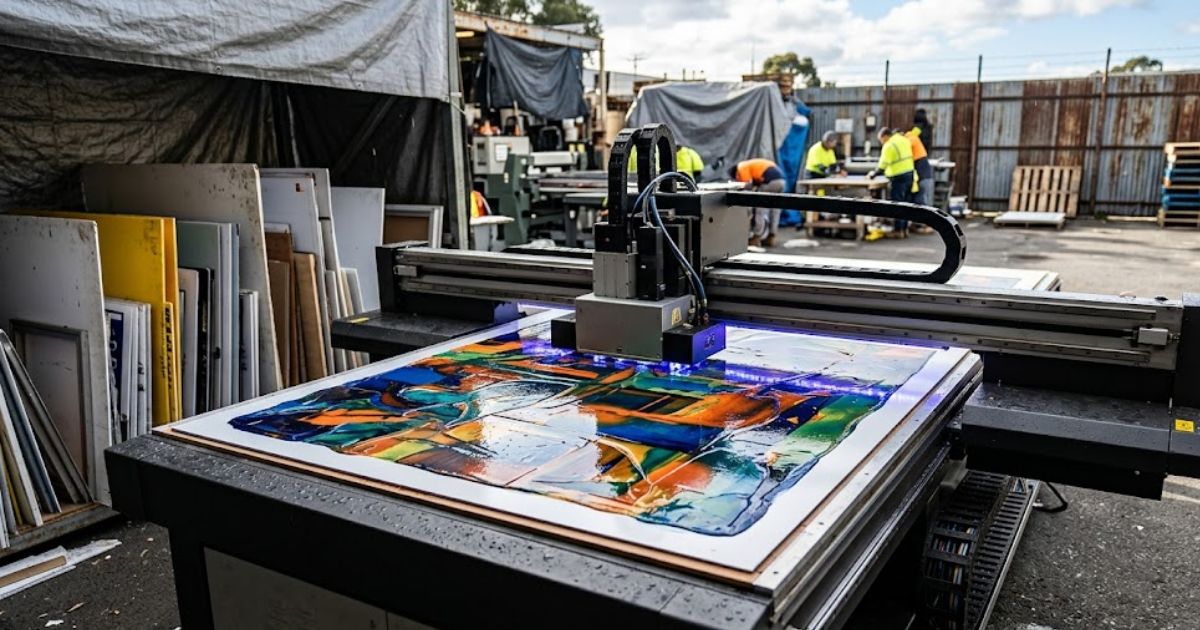
MTuTech production notes for UV printing applications
For buyers comparing UV printing applications options, the strongest ranking signal is not only the definition of the process. The page should also explain machine fit, production limits, material behavior, ink or fixture requirements, and the next page a buyer should read before requesting a quote.
Best machine fit
Use this guide together with UV Printer when the job requires stable UV output, repeatable setup, and production-ready print quality. If the work involves different shapes, materials, or order sizes, compare it with Flatbed UV Printer 2513 before choosing the final printer.
Production checklist
- Confirm the printable area, part height, and fixture or rotary requirements before quoting the job.
- Match ink, primer, and curing settings to the substrate so adhesion and scratch resistance are predictable.
- Standardize artwork preparation, white ink layers, and test prints before moving into batch production.
- Track production cost by ink use, setup time, rejects, and finishing steps instead of looking only at printer price.
Related MTuTech resources
FAQ
Which MTuTech printer should this article connect to? The best next page depends on the material, shape, and production volume. Flat products usually start with UV printer or UV Printer 9060 pages, while bottles, tumblers, and round products should connect to rotary, cylinder, tumbler, or cylindrical printer pages.
What should buyers check before ordering? Buyers should confirm print size, material compatibility, white ink needs, fixture design, curing performance, maintenance expectations, and whether the workflow supports repeatable production rather than one-off samples only.
Lamination vs Varnish: When Is Lamination Necessary?
| Factor | Varnish | Lamination |
| Scratch resistance | Moderate | High |
| UV blocking | Medium | High |
| Cost impact | Low | Medium |
| Labor time | Low | Medium |
Environmental Exposure Mapping Before Production
Where a sign gets installed matters as much as how it gets printed. A south facing installation takes 30 to 50 percent more UV stress daily. We check the UV index zone map for every job before we approve materials. Desert installs in Arizona hit prints harder than northern Minnesota placements. Temperature variance range between day and night also breaks ink bonds faster out west.
Coastal jobs bring a completely different threat. Coastal salt corrosion eats through ink layers and substrate surfaces quietly over months. Wind abrasion load near open shorelines scratches print surfaces faster than most people expect. We also measure the shade exposure ratio since shaded signs in Seattle outlast fully exposed ones in Miami easily.
Real World Outdoor Lifespan Benchmarks (Industry Data Synthesis)
From industry discussions and case observations:
| Configuration | Estimated Outdoor Life |
| Single layer UV on coroplast | 6–12 months |
| Flexible ink on ACM | 2–4 years |
| Multi-layer + varnish | 3–5 years |
| Laminated rigid signage | 4+ years |
UV Printer Capabilities That Directly Affect Outdoor Durability
Most people focus on print resolution and ignore durability controls completely. Variable dot technology places ink more precisely, which reduces weak spot formation. Adjustable curing power lets us dial in energy based on substrate thickness and ink load. Wrong curing power causes cracking within months on outdoor signs. The printhead type also decides how evenly ink distributes across each pass.
White + varnish channels build a protective shield over color layers outdoors. A strong white layer beneath color improves UV stability by blocking substrate bleed through. Ink channel configuration controls how many protective layers the printer can physically apply. We calibrate ICC profiling and RIP software settings together so color density and curing energy stay matched perfectly on every outdoor job.
Pre-Production Testing Protocol for B2B Print Shops
Guessing which ink and substrate combo works outdoors costs real money. We run a cross hatch test first to check how well ink grips the surface. A tape pull test follows right after to catch any weak bond spots early. Both tests together reveal adhesion problems before a full production run starts.
After bonding checks, stress simulation begins on every sample. The accelerated UV chamber mimics months of sun exposure in just a few days. We then run a freeze test to catch any ink that cracks under cold stress. A scratch resistance test checks surface toughness against real world contact damage. Only prints that pass all stages clear sample validation and move forward to full production.
Common Failure Patterns and Root Causes
| Failure Type | Root Cause |
| Fading | Low pigment density |
| Peeling | Poor surface energy |
| Cracking | Over curing |
| Edge lifting | Thermal expansion |
| Ink flaking | Rigid ink on flexible substrate |
Why Choose Mtutech Printer for Creating Durable UV Prints
Controlling durability starts long before ink touches a substrate. Mtutech Printer builds its LED curing system to adjust energy output per material type. Adjustable lamp intensity means operators change cure depth without swapping hardware or guessing settings. We’ve used this feature to fix under cure issues on thick rigid boards quickly. Sharp print resolution (dpi) places every ink dot cleanly, which cuts weak spot formation across large outdoor panels.
Ink compatibility across both stiff and flexible media removes costly substrate guesswork from production. Flatbed stability holds the print surface firm so every ink layer builds at consistent thickness. Uneven beds cause thin spots, and thin spots fail first under real outdoor stress. The media height sensor auto adjusts printhead distance, protecting deposit accuracy across substrates of varying thickness.
FAQs
How Long Does UV Printing Last Outside?
UV printing lasts 1 to 7 years outdoors. Layer thickness, ink type, and climate zone all control that range. Thicker multi-layer prints in low sun areas last longest. High exposure hours/day in desert zones cut lifespan fast.
How to Make UV DTF Last Longer?
Start with proper surface prep before applying anything. Add an adhesion promoter so the print bonds are tight. Apply a varnish layer on top to block UV degradation. Finish with lamination for scratch and moisture protection.
Is UV Printing Weatherproof?
UV printing is waterproof and UV resistant but not fully weatherproof forever. Water rolls off cured ink easily. Abrasion resistant coatings handle physical contact well. Chemical resistance varies by ink brand and curing quality. Sun degradation and water resistance are two separate concerns entirely.
What Are the Disadvantages of UV Printing?
Brittleness is the biggest trade off after heavy curing. High equipment cost stops many small shops from starting. Limited flexibility makes rigid ink crack on bending substrates. Surface adhesion limits appear on low energy materials without primer treatment.
What Is the Alternative to UV Printing?
Eco-solvent works well on flexible outdoor media in mild climates. Latex printing handles heat and humidity better in coastal zones. Screen printing suits high volume flat substrate runs efficiently. Dye sublimation works best on fabric and coated hard panels only.
Strategic Takeaways for B2B Beginners Investing in UV Printing
Skipping durability engineering early costs beginners far more later in reprints and lost contracts. Ink flexibility controls crack resistance, and adhesion validation confirms surface bonds hold before full runs begin. Curing intensity locks polymer integrity, while layer strategy builds the abrasion resistance your outdoor prints actually need. Environmental assessment before every job stops lifespan variance from surprising you mid contract. We’ve used these five controls across hundreds of jobs on Mtutech Printer setups to protect ROI and printer capability investments for US based print shops.