
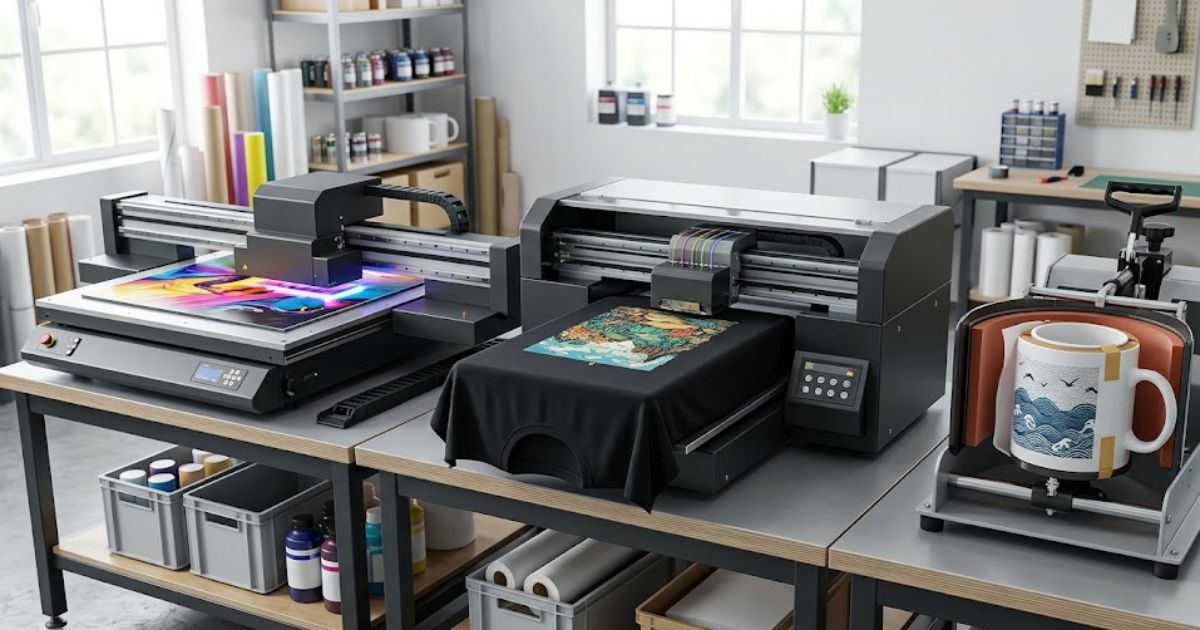
Choosing between UV, DTG, and sublimation printers? Each excels in different areas, and picking the wrong one can cost $3K–$50K. UV printers print directly on rigid materials like acrylic, wood, and metal. DTG delivers soft, vibrant prints on cotton apparel. Sublimation creates all over color on polyester but needs special fabric. Your choice impacts profitability, production speed, durability, and market reach. We run all three daily, so you get real world insights, not theory. This guide breaks down costs, quality, ideal uses, and limitations for each. Whether you’re printing merch, signage, or textiles, match the tech to your material and volume. Explore our UV printers for tailored equipment solutions that fit your business goals.
Understanding the Three Printing Technologies
How UV Printing Technology Works
The UV printing process deposits specially formulated UV ink directly onto substrate surfaces through precision printheads. A flatbed printer holds materials stationary while print heads move across depositing ink droplets precisely. UV curing lamps instantly harden ink through photopolymerization as print heads pass over deposited areas.
UV LED curing printing happens in milliseconds rather than requiring drying time like traditional methods. Prints emerge ready for handling immediately after the print head completes each pass entirely. UV technology prints on rigid materials, including acrylic, wood, metal, glass, and plastics successfully. We print on over 50 different substrate types using UV technology in our production facility.
How DTG Printing Works
Direct to garment printing applies textile ink directly onto fabric surfaces using specialized garment printer equipment. The DTG printing process requires pretreatment solution application on dark fabrics before printing begins. Water based inks absorb into fabric fibers creating soft prints that feel natural against skin.
White ink creates an underbase on dark garments allowing colors to appear vibrant properly. Heat curing after printing sets the ink permanently into fabric structure for wash durability. DTG handles cotton and cotton blend fabrics best while struggling with synthetic materials typically. Single garment printing makes DTG ideal for custom orders and small batch production runs.
How Sublimation Printing Works
The sublimation printing process converts sublimation ink from solid to gas without becoming liquid first. Dye sublimation printing requires a heat transfer press, applying pressure and temperature to substrates. Gaseous dye penetrates polyester fabrics and polymer coated surfaces, bonding permanently at the molecular level.
Prints transfer from special paper onto materials at temperatures between 350 and 400 degrees Fahrenheit, typically. Colors become part of the material rather than sitting on top, as other methods do. Sublimation works exclusively on polyester content above 65% or specially coated rigid substrates. Full color photographic prints achieve stunning vibrancy that other technologies struggle to match on compatible materials.
UV Printing Materials
Rigid material printing gives businesses the power to customize almost anything solid. UV printable substrates range from acrylic sheets to glass panels without needing heat or pressure. We ran a batch of 200 awards on metal plates last quarter. Each piece came out sharp with zero smudging or fading issues.
Wood panels accept UV ink beautifully for signs and home decor items. Multi-surface printing happens because UV light cures ink in seconds on contact. Most shops love this speed for rush orders. You can print on leather, plastic, and even phone cases the same day.
DTG Printing Materials
Cotton garment printing stands as DTG’s strongest advantage over other methods. Cotton t-shirts soak up water based ink into textile fibers naturally. This creates prints that feel soft and breathe well on skin. Apparel printing materials perform best with high cotton content in the blend.
Fabric garments containing more than 30% polyester cause problems though. Colors fade faster and feel slightly plastic after a few washes. We tested fifty mixed blend shirts against pure cotton last year. The cotton batch lasted three times longer with bright colors intact.
Sublimation Printing Materials
Polyester sublimation printing works through a unique chemical transformation process. Heat turns solid ink into a gas that bonds with polyester garments permanently. Coated mugs need a special polymer layer to accept the dye properly. Aluminum panels also require this coated product printing treatment.
UV vs DTG vs sublimation decisions depend heavily on your main products. Substrate compatibility limits each technology to specific material categories clearly. Printing material limitations mean sublimation fails on natural textile fabrics like cotton. Coated surfaces and rigid substrates each demand the right machine choice.
A smart printable materials comparison saves thousands in wrong equipment purchases. We watched a competitor buy sublimation gear for cotton shirts once. They lost money for six months before switching to DTG instead. Your product line determines which technology actually makes financial sense.
How Do the Costs Compare Between UV, DTG, and Sublimation?
Equipment Purchase Cost
Printer investment cost ranges dramatically based on technology type and production capacity needed. Entry level printers start around $2,000 for sublimation and $3,000 for basic DTG equipment typically. Commercial machines capable of professional production range from $8,000 to $25,000 across all categories.
| Technology | Entry Level | Commercial Grade |
| Sublimation | $2,000-$5,000 | $8,000-$15,000 |
| DTG | $3,000-$8,000 | $15,000-$30,000 |
| UV Printing | $4,000-$10,000 | $15,000-$50,000 |
UV printers require a higher initial investment but handle more product categories than competitors. We recommend matching equipment investment to realistic production volume projections before purchasing any system.
Ink and Consumable Costs
Printing ink cost comparison shows UV and DTG inks running higher than sublimation ink expenses. UV ink costs approximately $80-$150 per liter depending on the color and brand selected. DTG textile ink ranges from $60-$120 per liter with white ink costing significantly more.
Sublimation ink runs cheapest at $30-$60 per liter but requires transfer paper adding cost. DTG pretreatment solutions add $20-$40 monthly for operations printing dark garments regularly. UV printing eliminates transfer consumables, offsetting higher ink prices through reduced material waste. Per-print costs vary based on coverage area and production efficiency achieved during operations.
Maintenance and Operational Costs
Printer maintenance costs vary based on technology complexity and daily usage intensity levels. Print head cleaning requirements differ significantly between UV, DTG, and sublimation systems completely. Ink circulation systems on UV printers require attention to prevent settling and clogging problems.
DTG printers demand daily maintenance routines to prevent textile ink from drying in the heads. Sublimation printers require minimal maintenance since dye based inks flow freely without clogging issues. UV print head replacement costs $800-$2,500 depending on brand and model specifications currently. We spend approximately $200 monthly maintaining our UV equipment compared to $350 for DTG systems.
Which Printing Technology Is Faster for Production?
How fast you print decides your order volume. Batch production capabilities and print queue management affect overall throughput capacity directly for each method. Understanding speed differences helps businesses select technology matching their volume requirements accurately.
Production scalability matters most for businesses planning growth beyond the initial startup phases. Each technology handles scaling differently based on workflow steps and equipment limitations encountered.
UV Printing Production Speed
UV printing speed exceeds other technologies for product decoration because prints cure instantly during production. A flatbed printing system prints multiple items simultaneously when arranged properly on the print bed. No drying time or additional processing steps slow down production between printed pieces.
Small products like phone cases and promotional items are printed in 2-3 minutes each typically. Larger items require more time but still complete faster than transfer based methods consistently. We printed 150 custom phone cases in a single eight hour shift using our UV equipment. Jig systems allow continuous production without stopping to reload individual items during runs.
DTG Production Workflow
Garment printing workflow includes multiple steps that slow overall production speed compared to UV. Pretreatment machines apply solution to dark garments before printing can begin adding time. Pretreatment must dry for 30-60 seconds before loading garments onto the print platen properly.
Print times range from 2-5 minutes per garment depending on design complexity and coverage. Heat curing after printing adds another 60-90 seconds per piece to complete production. Dark garments requiring a white underbase take twice as long as light garment printing typically. Single garment loading limits throughput compared to batch printing capabilities of UV systems.
Sublimation Printing Workflow
MTuTech production notes for UV printer buying guide
For buyers comparing UV printer buying guide options, the strongest ranking signal is not only the definition of the process. The page should also explain machine fit, production limits, material behavior, ink or fixture requirements, and the next page a buyer should read before requesting a quote.
Best machine fit
Use this guide together with UV Printer when the job requires stable UV output, repeatable setup, and production-ready print quality. If the work involves different shapes, materials, or order sizes, compare it with UV Printer 9060 before choosing the final printer.
Production checklist
- Confirm the printable area, part height, and fixture or rotary requirements before quoting the job.
- Match ink, primer, and curing settings to the substrate so adhesion and scratch resistance are predictable.
- Standardize artwork preparation, white ink layers, and test prints before moving into batch production.
- Track production cost by ink use, setup time, rejects, and finishing steps instead of looking only at printer price.
Related MTuTech resources
FAQ
Which MTuTech printer should this article connect to? The best next page depends on the material, shape, and production volume. Flat products usually start with UV printer or UV Printer 9060 pages, while bottles, tumblers, and round products should connect to rotary, cylinder, tumbler, or cylindrical printer pages.
What should buyers check before ordering? Buyers should confirm print size, material compatibility, white ink needs, fixture design, curing performance, maintenance expectations, and whether the workflow supports repeatable production rather than one-off samples only.
The sublimation transfer process requires two separate production stages adding significant time overhead. First, printers output designs onto transfer paper during the printing phase completely. Second, heat press production transfers designs from paper onto products requiring operator attention.
Heat pressing takes 45-90 seconds per item depending on product size and material type. Transfer paper costs add expense while also creating waste requiring disposal after use. Paper alignment during pressing introduces human error affecting final print quality sometimes. We find sublimation produces 30-40% fewer units per hour compared to direct UV printing.
Which Printing Method Produces the Most Durable Results?
Printing durability comparison reveals significant differences based on printing technology and material combinations used. Print longevity depends on how ink bonds to substrates and environmental exposure conditions encountered. UV cured ink creates hard surface layers while fabric dye penetration integrates color into material structure. Understanding durability differences helps businesses select technology matching product lifespan requirements accurately.
Each printing method excels in specific applications but struggles in others based on bonding mechanisms. Product use cases determine which durability characteristics matter most for customer satisfaction ultimately.
Durability of UV Printed Products
UV print durability exceeds other technologies for rigid product decoration and outdoor signage applications. UV ink hardens into a tough shell that blocks scratches and water damage. Logos on promo products stay bright even after years of rough handling.
Outdoor signage printed with UV technology lasts 3-5 years without protective lamination needed. Indoor products maintain print quality for 7-10 years under normal environmental conditions typically. UV prints resist fading from sunlight better than most other digital printing methods available. We tested UV printed signs in direct sunlight for three years with minimal color degradation.
Durability of DTG Printed Garments
DTG wash durability depends heavily on proper curing and fabric pretreatment quality achieved. Properly processed prints withstand 50+ garment washing cycles without significant fading or cracking. Ink bonds to cotton fibers during heat curing creating relatively durable decoration results.
Water based inks feel soft against skin but remain less durable than plastisol screen printing. High temperature washing and tumble drying accelerate print degradation over time noticeably faster. Turning garments inside out before washing extends print lifespan by 30-40% for customers. Print cracking occurs when curing temperature or duration falls below optimal specifications required.
Durability of Sublimation Prints
Sublimation color durability produces the longest lasting results when printed on compatible materials properly. Dye becomes part of polyester fibers at the molecular level during heat transfer permanently. Colors stay put because the dye sits inside the fabric, not on top. Prints look fresh even after washing them hundreds of times.
UV resistance exceeds other printing methods because dye penetrates rather than coating surfaces. Prints feel completely smooth since no texture exists on properly sublimated polyester products. Material limitations restrict sublimation benefits to polyester fabrics and polymer coated substrates only.
Which Businesses Should Use Each Printing Technology?
Printing business models require specific technologies that match their target markets and product offerings. Choosing printing technology depends on material types, production volumes, and customer expectations encountered daily. Custom product businesses, apparel brands, and promotional product companies each benefit from different equipment choices. Matching technology to business models prevents costly investments in equipment that cannot serve actual needs.
Each technology excels within specific market segments while struggling in others completely. Understanding ideal use cases helps entrepreneurs make smarter equipment decisions from the start.
Best Use Cases for UV Printing
UV product printing serves businesses focused on rigid materials and diverse product customization applications. Promotional products like phone cases, awards, and signage represent core UV printing markets globally. Material versatility allows UV businesses to serve multiple industries from a single equipment investment.
Corporate clients ordering branded merchandise prefer UV printed products for durability expectations. Gift shops and online sellers benefit from printing on wood, acrylic, and metal surfaces. Event companies order UV printed signage, displays, and promotional giveaway items regularly. We built our promotional products division entirely around UV printing capabilities and diverse material options.
Best Use Cases for DTG Printing
DTG apparel printing works great for clothing brands and t-shirt shops. Bands, events, and sports teams order custom pieces all the time. Small batches and one-off orders fit perfectly with single shirt printing.
Print on demand businesses hook up DTG machines to their online stores easily. Startups pick DTG over screen printing when orders stay under 50 pieces. Fashion brands love skipping minimum order rules for limited drops. Cotton shirts work best while polyester needs a different printing method.
Best Use Cases for Sublimation Printing
Sublimation product printing fits shops selling mugs, cups, and polyester sportswear. Photo gift makers love how bright and colorful prints turn out every time. Athletic wear with moisture wicking polyester fabric sells more each year.
Custom home stuff like coasters, tiles, and pillow covers move fast with sublimation. Company mug programs bring steady repeat orders to sublimation shops month after month.
Exploring UV Printing Solutions for Product Customization
Product printing machines with UV tech work on more materials than any other digital option. UV printing solutions handle hard surfaces, bendy materials, and specialty items all from one machine. A UV printer lays ink right on finished products without transfers or special coatings. This makes advanced UV printing technology the most flexible choice for shops wanting variety.
UV DTF printer machines take things even further by mixing UV curing with transfer film methods. The adhesive layer bonds prints to fabrics that straight UV cannot touch on its own. UV DTF printing solutions open doors to cloth products alongside rigid items. Shops chasing multiple markets get more bang from equipment covering tons of product types. We run both direct UV and UV DTF systems to keep our product list as wide as possible.
FAQs
What is the difference between UV, DTG, and sublimation printing?
UV lays ink right on hard stuff like wood, metal, and glass. DTG soaks ink into cotton shirts for that soft feel. Sublimation only bonds with polyester fabric and coated mugs.
Which printing technology is best for small businesses?
Honestly it depends on what you plan to sell. T-shirt shops do great with DTG machines. UV opens more doors if you want product variety.
Is UV printing more versatile than sublimation?
Night and day differences here. UV handles wood, glass, leather, acrylic, and metal no problem. Sublimation needs polyester or a special coating to grab onto.
Which technology has the lowest operating cost?
Sublimation ink runs about 30 to 60 bucks a liter. You burn through transfer paper on every job though. UV skips that paper waste completely.
Can one business use multiple printing technologies?
Loads of shops mix and match machines these days. Throw a DTG next to your UV and suddenly you cover both hard goods and cotton tees.
Compare All Technologies
Looking for digital printing equipment that handles product customization like a pro? Check out the professional UV printing solutions and UV printing machines from MTuTech Printers. Their gear helps shops pump out quality custom products across tons of materials fast. Customization businesses big and small find equipment matching their exact production needs there.