
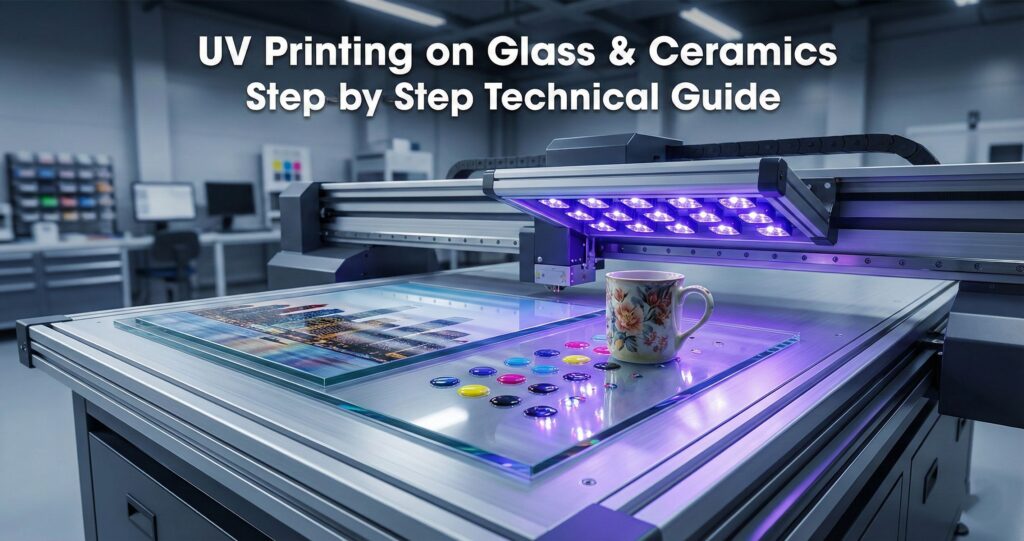
UV printing transforms liquid photo polymer ink into solid layers through a process called polymerization. When UV LED curing lights hit the ink, molecules link together rapidly and harden instantly. This chemical reaction happens differently on glass compared to paper or fabric. Non porous substrates like ceramic tiles don’t absorb ink at all. The liquid stays on top and bonds through molecular attraction instead of soaking in. We’ve tested this on hundreds of glass awards and coffee mugs at our facility. Absorbent materials like cotton pull ink into their fibers naturally. Glass and ceramic force the ink to grip the surface mechanically after curing completes.
The polymerization behavior creates a permanent bond without any absorption happening underneath. UV printing systems use specific ink formulas designed for hard surfaces that remain non absorbent. Light energy triggers the chemical change in seconds, not minutes like traditional drying methods. We notice the ink transforms from wet to completely solid before the item even moves off the printer bed. This instant curing prevents smudging or running that happens with solvent based inks on similar materials.
Why Are Glass and Ceramics Challenging for UV Printing?
Glass and ceramic materials create unique problems because of their chemical inertness at the molecular level. These surfaces don’t react with most substances that touch them. Surface energy measures how easily liquids spread and stick to materials. Glass naturally has low surface energy, which makes liquid ink bead up instead of spreading flat. We’ve printed on thousands of wine glasses and noticed ink pooling into droplets before curing starts. The glaze layer on ceramic mugs creates an even slicker barrier that repels adhesion attempts. Most printed items fail because the ink never forms strong molecular bonds with these smooth surfaces.
The physics behind adhesion failure comes down to weak attractive forces between materials. Ink molecules need something to grab onto at a microscopic level. Smooth glazed surfaces offer almost no texture or reactive sites for bonding. We measure surface tension before printing to predict how well coatings will perform. Materials with high chemical resistance reject foreign substances automatically as a basic property. This protective quality makes glass perfect for food storage but terrible for traditional printing methods.
What Surface Preparation Is Required Before UV Printing?
Surface preparation works as a complete system that directly affects how well curing performs later. Contamination removal comes first because oils, dust, and fingerprints block ink from touching the actual surface. We clean every glass piece with isopropyl alcohol before loading it into printers supporting rigid substrate workflows. Skipping this step causes ink to lift off after just a few washes. Surface activation changes the molecular properties of glass temporarily to accept liquids better. Plasma treatment or flame exposure raises surface tension for about 30 minutes before it drops again. We time our printing runs carefully to work within this activation window.
Adhesion promoters create a chemical bridge between the slick surface and the curing ink layer. These primers bond to glass on one side and grab ink molecules on the other. Success during curing depends completely on how well we prepare surfaces beforehand. Dirty or untreated materials cause the light activated reaction to form weak connections that fail quickly. We’ve tested skipping preparation steps and watched prints scratch off with fingernails within hours. Clean surfaces with proper activation let polymerization create bonds strong enough to last years.
How Do You Prepare Glass for UV Printing?
How Should Glass Be Cleaned Before Printing?
Surface residue exists at microscopic levels even when glass looks perfectly clean to your eyes. Body oils transfer from hands during handling and create invisible barriers that stop ink adhesion. We soak lint free wipes with 99% isopropyl alcohol and wipe in one direction only. Circular motions just spread contaminants around instead of removing them completely from the material. Float glass needs extra attention on edges where manufacturing residue hides in tiny imperfections. Micro contaminants like silicone vapors from nearby manufacturing areas settle on surfaces and cause random print failures. We store cleaned pieces in sealed containers if we can’t print them within 15 minutes.
When Are Flame, Plasma, or Chemical Treatments Used on Glass?
Flame treatment gets chosen when we need fast activation for small batch runs of standard items. We pass a propane torch across tempered glass surfaces for 3 seconds to raise energy levels temporarily. Plasma treatment works better for coated glass because it penetrates protective layers without damaging the base material. This method costs more but gives consistent results on difficult surfaces that flames can’t fix. Chemical primers become necessary when printers compatible with treated glass will handle materials stored for days before printing. We choose treatments based on glass type, production volume, and how long between prep and actual printing.
What Printing Parameters Influence UV Print Quality on Glass?
Print height controls the distance between printheads and glass, which directly affects how droplets land and spread. Setting the gap too low causes nozzles to smear wet ink before curing happens. Raising it too high makes droplets scatter and lose precision when they hit the surface. We test every new glass thickness to find the exact spacing that keeps dots round and sharp. Ink layering builds color density by stacking transparent droplets on top of each other gradually. Each layer needs partial curing before the next one drops or colors bleed together and ruin detail. Visual positioning systems for rigid materials help us align pass count with item placement perfectly.
Pass count determines how many times printheads travel over the same spot to build up opacity. More passes create richer colors but increase the chance of surface flooding if timing stays wrong. We balance speed against quality by adjusting how fast heads move between each pass. Lower UV print quality happens when these three parameters fight each other instead of working as a system. Fast printing with high layering and low height causes smudging every time in our experience. Matching all settings to glass type and desired finish produces consistent professional results across production runs.
What Printing Parameters Matter Most for Ceramics?
Uneven surfaces on ceramic mugs and plates create distance variations that flat glass never has. Curved handles sit higher than the body, which throws off printhead spacing across the item. We measure the tallest and lowest points before setting baseline heights for each ceramic shape. Camera assisted alignment tracks these height changes and adjusts droplet timing automatically during runs. Multi pass printing becomes essential because single passes can’t deposit enough ink into recessed areas reliably. Curved sections need 4-6 passes while flat areas only require 2-3 for matchin
MTuTech production notes for UV printing applications
For buyers comparing UV printing applications options, the strongest ranking signal is not only the definition of the process. The page should also explain machine fit, production limits, material behavior, ink or fixture requirements, and the next page a buyer should read before requesting a quote.
Best machine fit
Use this guide together with UV Printer when the job requires stable UV output, repeatable setup, and production-ready print quality. If the work involves different shapes, materials, or order sizes, compare it with Flatbed UV Printer 2513 before choosing the final printer.
Production checklist
- Confirm the printable area, part height, and fixture or rotary requirements before quoting the job.
- Match ink, primer, and curing settings to the substrate so adhesion and scratch resistance are predictable.
- Standardize artwork preparation, white ink layers, and test prints before moving into batch production.
- Track production cost by ink use, setup time, rejects, and finishing steps instead of looking only at printer price.
Related MTuTech resources
FAQ
Which MTuTech printer should this article connect to? The best next page depends on the material, shape, and production volume. Flat products usually start with UV printer or UV Printer 9060 pages, while bottles, tumblers, and round products should connect to rotary, cylinder, tumbler, or cylindrical printer pages.
What should buyers check before ordering? Buyers should confirm print size, material compatibility, white ink needs, fixture design, curing performance, maintenance expectations, and whether the workflow supports repeatable production rather than one-off samples only.g color depth.
Ink thickness builds differently on rounded shapes compared to flat glass because gravity pulls wet layers downward. Ceramics require thinner individual layers applied in more passes to prevent dripping on vertical walls. We’ve watched thick single coats slide down mug sides before curing lights could solidify them properly. Geometry challenges force us to slow print speeds and increase pass numbers for consistent coverage. Textured ceramic finishes add another complexity layer where ink pools in valleys and thins on peaks. Matching printing parameters to actual item topology produces better results than chasing higher resolution numbers alone.
How Does UV Curing Affect Glass and Ceramic Prints?
UV curing uses light energy instead of heat to harden ink, which protects delicate items from cracking. Traditional oven drying exposes glass and ceramic to thermal stress that can shatter thin materials instantly. UV wavelength at 395 nanometers triggers polymer cross linking without raising surface temperature more than a few degrees. We’ve cured prints on wine glasses that stay cool enough to touch immediately after finishing. Curing intensity measured in watts per square inch determines how fast molecules bond together completely. Lower intensity takes longer but prevents any risk of heat buildup on temperature sensitive substrates.
Polymer cross linking happens when UV light makes individual ink molecules grab onto neighboring molecules and form chains. This chemical process creates a hard plastic film bonded directly to the slick surface underneath. Heat based methods would crack glazed ceramics because rapid temperature changes make materials expand and contract differently. Light based curing keeps everything at room temperature while still achieving full hardness in under two seconds. We run production on antique porcelain pieces that would never survive traditional kiln processes safely. Material safety becomes guaranteed when energy goes into chemical bonds instead of raising actual temperatures.
How Is UV Ink Adhesion Tested on Glass and Ceramics?
What Tests Reveal About UV Ink Bonding Strength
Adhesion testing isn’t about fixing failures after printing finishes. We use these methods to validate strength before products reach customers. The tape test shows if ink peels under stress by applying pressure sensitive adhesive. You pull the tape fast and check for flaking. Cross hatch test cuts a grid pattern through the ink layer down to the substrate. We examine how many squares lift away when tape removes them. This reveals if the curing process bonded properly to glass or ceramic surfaces.
Wash resistance testing simulates real cleaning conditions your printed items face daily. We scrub samples with detergents and hot water repeatedly to measure durability. Abrasion resistance testing rubs the surface with weighted materials that mimic handling wear. These aren’t troubleshooting steps but proof your UV ink won’t disappoint buyers. Each method confirms different bonding qualities that matter for long term performance.
How Does UV Printing Compare to Other Methods for Glass and Ceramics?
Different jobs need different tools when decorating glass and ceramic items. Screen printing works best for bulk orders with solid colors and simple designs. We choose this method when clients need 500 identical wine glasses or dinner plates. Pad printing handles curved surfaces like mugs and bottles that other techniques can’t reach. This transfer process picks up ink from a plate and stamps it onto rounded shapes.
Digital printing with UV technology fits custom work where every piece looks different. We select UV for photo quality images and small batch runs under 100 units. Each method serves specific production goals rather than being better or worse overall. Match your project type to the right decorating technique for the best results.
Why Choose UV Printing for Glass and Ceramic Applications?
Glass and ceramics crack under high heat during traditional decorating processes. Low thermal impact from UV curing protects delicate substrates that would shatter in ovens. We print temperature sensitive items like thin wine glasses without any warping or breaking. Fine detail control through UV printing platforms captures tiny text and complex artwork that older methods blur. Mtutech printer models deliver sharp edges on intricate patterns down to microscopic levels.
Process consistency matters when every vase or tile needs identical color matching. UV systems cure ink at exactly the same rate every single time. We run batches of 50 pieces knowing the first and last will look identical. This reliability fits production environments where quality cannot vary between shifts or operators.
FAQs
Does UV printing permanently bond to glass?
Yes, UV printing bonds permanently to glass surfaces. We use special primers before printing. This creates a strong chemical bond. Our prints last for years without fading or peeling.
Can UV printed ceramics be washed regularly?
Yes, you can wash UV printed ceramics regularly. We recommend gentle hand washing for best results. Avoid harsh scrubbing pads. Our UV prints withstand normal daily use without damage.
Is UV printing safe for heat sensitive glass?
Yes, UV printing is safe for heat sensitive glass. We use low temperature LED curing technology. This process creates no heat damage. Your delicate glass items stay perfectly intact during printing.
Why does UV ink peel from ceramic mugs?
UV ink peels when surfaces are not properly prepared. We always clean and prime ceramics first. Proper adhesion promoters prevent peeling. Our expert process ensures long lasting prints every time.
Can UV printing be used on curved glass surfaces?
Yes, we print on curved glass surfaces easily. Our advanced UV printers handle bottles and vases. We adjust settings for each curve. This ensures perfect coverage on rounded shapes.
Explore UV Printers for Glass
Material variability between frosted and clear glass demands printer flexibility you should verify first. We check if machines handle thickness differences from 2mm tiles to 10mm awards. Workflow stability depends on automatic height sensors that adjust during runs without stopping production. Quality control systems track color accuracy across hundreds of pieces so you catch problems early. Browse UV Printer Category options then compare Hybrid UV Printer models for mixed substrate work. Study Visual Positioning UV Printer technology if precise artwork placement matters for your ceramic designs. Mtutech printer features address these checklist items through built in monitoring tools.