
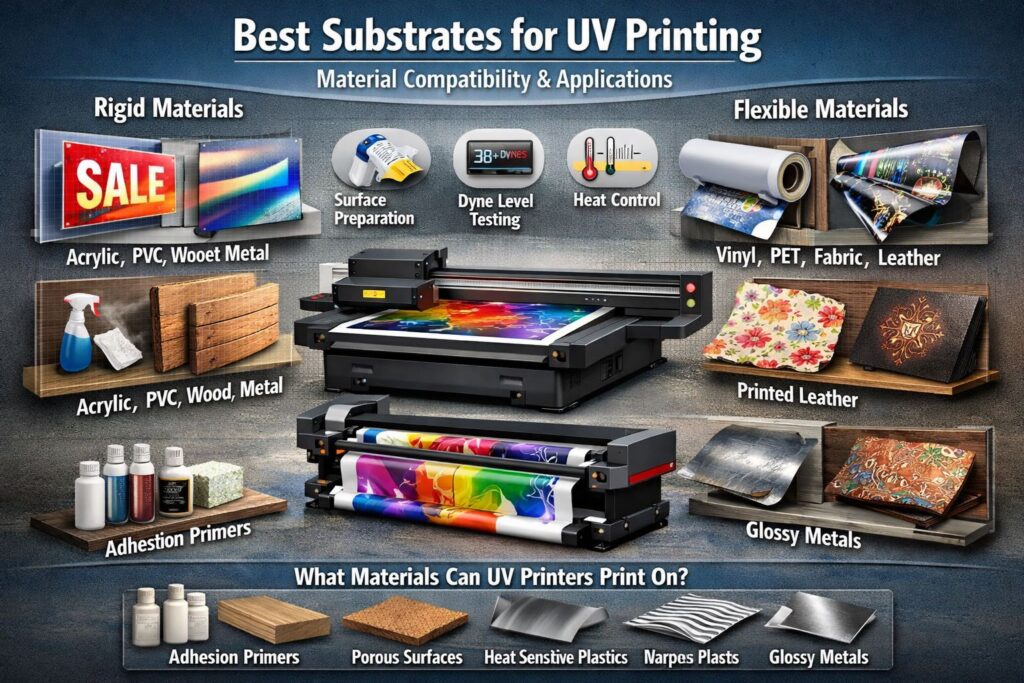
UV flatbed printers and roll to roll UV printers handle different surfaces based on porosity, not just texture. Rigid materials like acrylic bond well because UV ink cures instantly on non porous materials without absorption. Flexible materials such as vinyl work when pre treated since raw surfaces repel uncured ink. Semi porous materials need primer coats to prevent ink from soaking too deep before the UV light hits it. We’ve tested dozens of substrates and learned that surface energy matters more than hardness.
Specialty substrates like leather or wood print beautifully but require power adjustments to avoid scorching or under curing. Temperature sensitive plastics warp under high UV intensity, so operators lower wattage and add multiple passes. Glossy metals reject ink unless we scuff them first or apply adhesion promoters. The printer doesn’t fail, the prep work does. Every material has a sweet spot between ink adhesion and cure speed that changes with humidity and batch quality.
How UV Printing Substrate Compatibility Is Determined
Surface Energy Controls UV Ink Adhesion
Surface energy measured in dyne level determines whether ink wetting happens or adhesion failure ruins your print. We test materials with dyne pens before running jobs because readings below 38 dynes need primers or plasma treatment to create proper bonding.
Porosity Affects UV Ink Absorption
Porous substrates like wood grain and MDF soak up ink fast, changing color saturation and causing dot gain. Ink absorption rate creates visual trade offs where you gain texture but lose vibrancy on raw surfaces.
Material Rigidity Impacts Curing Stability
Substrate flatness and mechanical stability prevent warping that throws off print head clearance during multi pass jobs. Flexible films need tension systems to maintain registration accuracy and avoid ghosting between color layers.
Heat Sensitivity Limits UV Lamp Intensity
UV lamp temperature must stay controlled when printing thin plastics that suffer heat distortion and film shrinkage. LED UV curing runs cooler than mercury lamps, protecting delicate materials while maintaining proper ink curing profile speed and thermal stability.
Best Rigid Substrates for UV Printing
Acrylic Is the Most Reliable Substrate for UV Printing
Cast acrylic holds ink better than extruded acrylic because it has fewer internal stresses that cause cracking. We print thousands of backlit signage panels yearly and cast acrylic delivers optical clarity that lasts outdoors for seven years without yellowing.
PVC and Foam Boards Dominate UV Signage Printing
PVC sheet materials like Sintra board and Forex offer unbeatable cost to durability ratios for lightweight signage projects. Foam board costs half what acrylic does but survives three years indoors before edges start chipping or delaminating.
Wood Requires Sealing Before UV Printing
Natural wood and MDF surfaces suck ink deep into grain absorption zones where UV light can’t cure it. Sealants create a barrier that stops ink from disappearing into pores, saving you 40 percent on ink waste per job.
Metal Needs Primers for UV Ink Bonding
Aluminum and stainless steel reject ink unless we apply an adhesion promoter first to rough up the surface. Powder coated metal already has texture, so it bonds faster than bare metal that’s too smooth for ink to grip.
Glass Demands Adhesion Promoters
Glass panels are high risk because ink peels off without adhesion promoter but offer premium scratch resistance when done right. Ceramic coating adds an anchor layer that turns glass into a long lasting display material for luxury applications.
Best Flexible Substrates for UV Printing
Vinyl Supports Roll to Roll UV Printing
Self adhesive vinyl works perfectly in roll to roll UV printing Applications because it stays flat under tension without buckling. Calendered vinyl lasts three years outdoors while cast vinyl survives seven years because its molecules stretch without breaking down.
PET and Polycarbonate Films Need Layer Control
PET film and polycarbonate crack when ink layering gets too thick because heavy ink weight bends the film. We keep ink layering under three passes to maintain crack resistance on thin films that flex during handling.
Banners Resist Cracking with Low Heat Curing
PVC banner material and mesh banner fabrics need UV flexibility inks that cure with less heat than eco solvent systems. Traditional solvent inks leave banners stiff, but UV flexibility inks let them fold hundreds of times without white stress lines.
Wallpaper Benefits from Surface Cured UV Ink
Wallcoverings printed with UV cure instantly, so decorative printing projects ship the same day without off gassing odors. Matte finishes on wallpaper look better with surface cured UV ink because it doesn’t soak in and create shiny spots.
How to Prepare Substrates for Consistent UV Print Results
Cleaning Removes Adhesion Barriers
Isopropyl alcohol wipes eliminate dust contamination and oil residue that block ink from touching the actual surface. We run adhesion testing on every batch because one fingerprint causes ink to peel off during surface preparation steps.
Primers Increase Ink Bonding Strength
Adhesion primer creates a coating layer that grabs both the substrate and ink at the molecular level. Pre treatment with primers doubles scratch resistance and prevents print consistency failures when clients handle finished products roughly.
Plasma and Flame Treatment Raise Surface Energy
Plasma treatment and flame treatment are industrial pre treatment methods that modify plastic surfaces without wet chemicals or drying time. We measure dyne levels after plasma treatment to confirm the surface energy jumped high enough for permanent bonding.
Best UV Printing Substrates by Application
Substrates for Signage and Retail Displays
Acrylic sheets and PVC boards like Sintra deliver perfect color vibrancy and edge definition for point of sale displays. UV flatbed printing on foam board creates crisp indoor signage because surface smoothness prevents dot spread that blurs text. We measure thickness tolerance on every backlit panel’s order since uneven sheets cause light leaks that ruin the display effect.
Substrates for Packaging and Branding
Paperboard and cardstock work great for promotional packaging when you need short run customization without minimum order hassles. Rigid boxes printed with UV cure instantly, so ink adhesion consistency stays perfect through fold line durability tests that crack solvent inks. PET sheets hold brand graphics with scratch resistance that survives shipping without protective bags or bubble wrap.
Substrates for Industrial Labels and Panels
Aluminum panels and stainless steel need adhesion promoters but deliver unmatched chemical resistance for control panels and nameplates. Polycarbonate sheets maintain dimensional stability in extreme heat where paper compliance labels would curl or fade within months. We test abrasion resistance by rubbing printed samples with acetone soaked rags to guarantee long term legibility in factory environments.
Substrates for Interior Décor and Furniture
Wood panels and MDF keep natural texture retention visible through UV ink layers that don’t fill grain patterns. Glass panels and ceramic tiles printed with UV cure without odors, so decorative surfaces install immediately in occupied homes. Furniture components benefit from matte vs gloss finish options that match existing pieces without needing post print coating steps.
Substrates for Outdoor UV Printing
Aluminum composite panels and outdoor grade acrylic survive years outside because they resist moisture resistance and temperature stability swings. PVC signage boards hold outdoor graphics longer when paired with inks that have UV resistance and fade resistance chemistry built in. Weather resistant substrates need ink flexibility so thermal expansion doesn’t crack the printed surface during summer heat spikes.
Which Materials Are Not Suitable for UV Printing?
Fabric absorbs UV ink deep into fibers where light can’t reach to cure it properly. Extremely soft rubber bends under the print head and creates uneven gaps that ruin ink placement accuracy. We’ve tested hundreds of samples and found that silicone (untreated) repels UV ink completely because its natural oils block adhesion at the molecular level. Highly oily plastics like polyethylene need flame treatment first, but even then the ink peels off within days of handling.
Porous textiles and super flexible materials fail because UV curing requires stable surfaces that don’t move or absorb liquid. Silicone (untreated) kitchen mats look perfect coming off the printer but the ink wipes away with your thumb after curing. Extremely soft rubber like balloon material stretches during printing and causes registration errors that misalign colors by millimeters. Highly oily plastics need chemical etching to remove surface contamination, which adds cost and still doesn’t guarantee permanent bonding like it does on acrylic or metal.
Why Choose UV Printing for Multi Material Production?
Digital manufacturing with UV technology eliminates the need for separate equipment when switching between wood, metal, and plastic substrates. Short run production becomes profitable because Mtutech Printer systems don’t require plate setups or minimum order quantities like offset presses demand. We switch from printing acrylic signs to ceramic tiles in under five minutes by adjusting fast curing lamp intensity and bed height. Customization happens on demand since each piece can have unique graphics without slowing down the production line or adding extra costs.
Traditional print methods force you to commit to one material type or pay for expensive retooling between jobs. Fast curing means finished products stack and ship immediately without waiting hours for solvent inks to dry or off gas. Digital manufacturing workflows let us print ten different designs across five substrate types in a single afternoon shift. Short run production orders of 20 units cost nearly the same per piece as orders of 200 because setup time stays minimal. MTutech Printer flatbed systems handle this material variety without operator intervention, turning customization requests into same day deliveries instead of week long projects.
FAQs
Can UV printers print on flexible materials?
Yes, UV printers work great on flexible materials. We print on vinyl, leather, fabric, and rubber daily. Flexible substrates up to 3mm bend without ink cracking. Our UV technology bonds permanently to soft and stretchy surfaces.
Do all UV substrates require primers?
No, most UV substrates do not need primers. Uv Printing on Glass, metal, and some plastics need primer for best adhesion. We test each material first. UV Printing on Wood, acrylic, and coated surfaces usually print perfectly without any primer treatment.
Are UV prints waterproof?
Yes, UV prints are fully waterproof after curing. The UV light hardens ink instantly. This creates a sealed layer that resists water, rain, and moisture. We guarantee our outdoor prints withstand all weather conditions.
Which UV substrates last outdoors?
Aluminum, ACM panels, and treated PVC last longest outdoors. These materials resist sun, rain, and temperature changes. We recommend them for signs and displays. With proper substrate choice, outdoor UV prints last five to seven years.
How thick can UV printable materials be?
Most UV flatbed printers handle materials up to 150mm thick. We print on doors, furniture, and heavy boards easily. Thickness depends on your printer model. Our equipment handles rigid substrates from paper thin to six inches deep.
See Compatible UV Printers for Each Substrate Type
UV flatbed printers handle rigid materials like acrylic, wood, and metal sheets up to two inches thick with vacuum bed systems. Roll to roll UV printers excel at flexible substrates including vinyl, banners, and wallpaper by maintaining constant tension during multi pass printing. Hybrid UV printers from Mtutech Printer combine both capabilities, letting you switch between foam board signage and PET film labels without changing machines. We match substrate thickness and flexibility directly to printer architecture because using a flatbed for thin films wastes time, while roll systems can’t stabilize rigid panels during high speed curing cycles.