
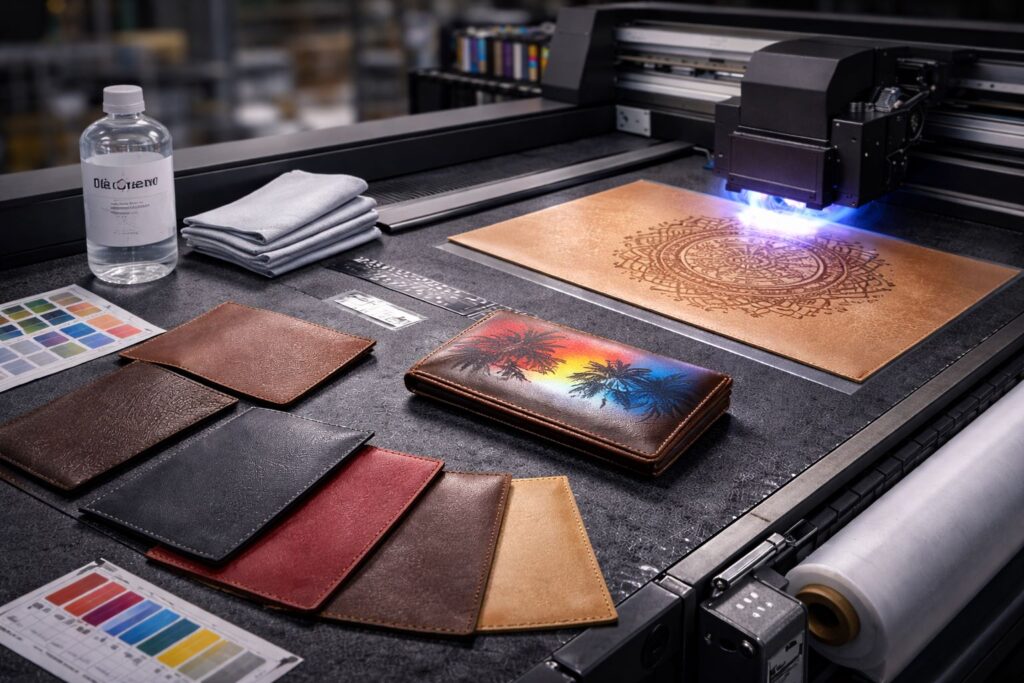
UV printing bonds ink to leather surfaces through a chemical reaction triggered by ultraviolet light. We’ve worked with this digital printing technology for years and watched how it transforms custom designs. The process starts when specialized UV ink gets applied directly onto treated leather. Once the design prints, focused ultraviolet beams hit the wet ink layer instantly. This light triggers ink polymerization where liquid ink molecules link together and harden in seconds. Traditional methods need heat or air drying but ultraviolet curing happens right away through this light-activated chemical bond.
Most people don’t realize the magic happens at the molecular level between ink and leather coating. Leather gets prepped with a thin polymer layer that creates perfect adhesion points. When UV light strikes, photoinitiators in the ink break apart and grab onto these coating molecules. We use this method because it creates permanent bonds that won’t crack or peel like heat-pressed vinyl. The ink actually becomes part of the leather’s protective layer instead of sitting on top. You’ll notice printed areas feel smooth and integrated, not raised or textured like older printing methods.
Which Leather Types Are Suitable for UV Printing?
Can You UV Print on Genuine Leather?
Genuine leather shows unpredictable results because natural pores create uneven ink penetration across different hides. Full grain leather absorbs differently in each section based on how the animal lived and moved. Top grain leather performs slightly better but still needs a surface coating for consistent prints. We test each hide before committing to large runs because surface porosity varies wildly between pieces. The risk comes from treating leather types as identical when each piece behaves completely differently under UV light.
Is UV Printing Better on Synthetic Leather?
Synthetic leather delivers perfect prints every single time because of its engineered uniform surface structure. PU leather uses a controlled polymer coating that eliminates the random absorption issues found in animal hide. Faux leather gives us identical results across every square inch without surprises or testing delays. We classify coated leather alternatives as process optimized materials that solve technical problems rather than cheap substitutes. The factory-made consistency means your design looks exactly the same on piece one and piece one thousand.
Which Leather Finishes Affect UV Ink Adhesion?
Aniline leather rejects UV ink because its open pores absorb liquid before curing can happen properly. Semi aniline leather works better with a thin protective layer but still shows fading over time. Pigmented leather accepts UV printing flawlessly thanks to its sealed coating that blocks absorption completely. Oiled leather repels ink droplets before they can bond to any surface underneath the oil treatment. We classify materials by finish type first because it predicts printing success better than knowing if something is real or synthetic.
How Should Leather Be Prepared Before UV Printing?
Clean Leather for UV Printing
Degreasing removes oils that block ink from bonding to the material underneath. Body oils and factory conditioners create invisible barriers that cause prints to peel within days. We wipe every piece with isopropyl alcohol before loading it into the printer. Surface preparation prevents 90% of adhesion failures we’ve seen in custom orders. Skipping this step means the ink sits on top of grease instead of touching actual leather. The UV light cures the ink but can’t fix a contaminated foundation layer.
Secure Flexible Leather During Printing
Fixation methods stop material movement that creates blurry or misaligned designs during the printing process. Leather naturally curves and shifts when printer heads pass over it repeatedly. We use vacuum tables or low tack adhesive sheets to lock pieces completely flat. Print stability depends on eliminating even tiny movements measured in fractions of an inch. One corner lifting during a print run ruins the entire design and wastes expensive material. The relationship between secure positioning and sharp results becomes obvious after your first failed print.
How Does the UV Printing Process on Leather Work?
UV Printing Workflow for Light Colored Leather
Direct color printing works perfectly on pale materials because the base tone doesn’t fight your design. CMYK UV ink sits directly on beige or tan leather without needing extra layers underneath. We skip the white base entirely which cuts production time and reduces ink absorption into the material. Printing workflow becomes simpler and cheaper when the natural background supports your color reproduction goals. Light surfaces need fewer ink layers which means less weight and more flexibility in the finished product. UV curing stages happen faster because only one color pass needs to harden instead of multiple layers.
UV Printing Workflow for Dark Leather
Dark leather demands a white ink layer first or your colors disappear into the black background completely. The base coat creates opacity that blocks the dark surface from showing through your design. We print white, cure it with UV light, then add CMYK UV ink on top for proper color contrast. A final varnish layer seals everything and protects against scratches that would expose dark material underneath. This stacking method uses more ink layers but creates prints that last years instead of months. Each UV curing stage hardens one layer before the next gets applied which prevents colors from mixing together.
What Are the Best UV Printing Settings for Leather?
UV lamp intensity controls how much curing energy hits the ink to trigger the hardening reaction. Too much power bakes the material and creates brittle prints that crack when bent. We adjust layer thickness based on how the specific leather responds to heat and light exposure. Thinner coats need less energy while thicker applications demand stronger UV output to cure completely. Ink flexibility suffers when settings pump too much energy into delicate materials like soft hide. The goal involves finding the sweet spot where ink hardens fully without damaging the base material.
Leather reacts differently than plastic or metal so we tune each setting to match material behavior. Soft garment leather needs gentler UV lamp intensity compared to thick belt leather that handles higher energy. We test small patches first to see how the material flexes after curing finishes. Settings that work perfectly on one hide type might destroy another because each responds uniquely. The relationship between power levels and final durability becomes clear only through hands on testing with your specific material.
What Products Can Be Made Using UV Printing on Leather?
Fashion and Wearable Accessories
Wallets bend hundreds of times daily which creates extreme stress at flex zones where prints crack first. Belts wrap around curved surfaces and rub against clothing constantly during wear. Handbags face scratching from keys and rough handling that tests ink adhesion beyond decoration needs. We group these leather products by movement frequency instead of style because durability depends on stress patterns. Customization must survive real world abuse where items fold and flex repeatedly throughout normal use. The product categories that bend most need reinforced varnish and flexible ink formulations to prevent cracking.
Corporate and Promotional Leather Items
Branded gifts carry company identity so logos need color stability that lasts years without fading. Corporate merchandise gets judged by print quality because cheap looking designs hurt brand perception with clients. We’ve seen logo colors shift within months when UV settings don’t match material chemistry properly. Business items rarely flex like wallets but still demand professional appearance over extended timeframes. The challenge involves maintaining sharp edges and true colors rather than surviving constant bending stress.
Interior and Lifestyle Applications
Upholstery rarely gets touched compared to wearable items which makes UV printing ideal for durability. Desk mats sit flat and experience minimal abrasion beyond occasional cleaning with damp cloths. Decorative panels hang on walls where prints face zero mechanical stress from flexing or rubbing. We classify these as low contact applications where appearance longevity matters more than flex resistance. Print adhesion requirements drop significantly when materials stay stationary instead of moving constantly like accessories.
What Problems Occur in UV Printing on Leather and How Are They Fixed?
Cracking happens when ink lacks flexibility to move with the material during bending or folding. Peeling starts at edges where ink delamination occurs because the chemical bond never formed properly. We trace most failures back to contaminated surfaces that blocked molecular adhesion during the curing process. Environmental conditions like humidity and temperature fluctuations cause ink layers to expand differently than the base material. Poor cleaning before printing leaves oils that create invisible barriers between ink and leather surface. The root cause almost always involves preparation mistakes rather than equipment problems or ink quality issues.
Fixing these problems requires diagnosing why the bond failed instead of just redoing the print. Cracking gets prevented by reducing UV lamp power and using more flexible ink formulations. Peeling stops when we properly degrease surfaces and verify complete curing before handling printed pieces. We adjust environmental conditions in the workspace to maintain consistent temperature and moderate humidity levels. Ink delamination disappears once contamination gets eliminated through better surface prep protocols and quality control steps. Most shops blame the printer when the real issue sits in their cleaning and handling procedures.
Why Professional UV Printers Perform Better on Leather
Industrial UV printers deliver identical results across thousands of prints because their mechanical systems eliminate variation. Curing control stays precise through sensors that monitor UV output continuously throughout each production run. White ink system maintenance gets automated with circulation features that prevent settling and clogging between jobs. We’ve compared hobby machines to professional units and the difference shows up in repeatability over time. Height adjustment mechanisms on professional equipment compensate for thickness variations automatically instead of requiring manual tweaking. The stability comes from engineered precision rather than brand reputation or marketing claims alone.
Budget printers force operators to guess and adjust settings constantly while professional machines maintain consistency. Industrial UV printers use closed loop feedback systems that detect issues before they ruin prints. Temperature controlled curing control prevents hot spots that cause uneven hardening across the design surface. Dedicated white ink system channels keep base coats flowing smoothly without air bubbles or density changes. Height adjustment sensors measure material thickness and modify print head distance automatically for each piece. We get predictable outcomes because the hardware compensates for variables instead of depending on operator skill.
Why Choose UV Printing for Leather Products?
UV Printing Solve on Leather
UV printing eliminates heat damage that warps or discolors delicate leather during traditional thermal transfer methods. Long drying times disappear because ultraviolet light cures ink instantly instead of requiring hours of air drying. Limited customization stops being a barrier since digital files allow unlimited design variations without physical screens. We’ve watched production efficiency jump dramatically when shops switch from heat presses to UV systems. Customization becomes economically viable for single pieces instead of requiring minimum order quantities to justify setup. The technology removes production constraints that previously made personalized leather goods too expensive or slow.
UV Printing Increase Product Value
Personalization transforms generic items into unique pieces that customers pay premium prices to own. Premium finish quality signals craftsmanship and attention to detail that justifies higher retail pricing structures. Perceived value increases when buyers see sharp photo-realistic prints impossible with older decoration methods. We’ve documented price increases of 40-60% on identical products after adding custom UV printed designs. Product durability that survives years of use reinforces quality perceptions and reduces return rates significantly. The value creation happens through both visual appeal and functional longevity that customers experience daily.
FAQs
Can UV printers print on real leather?
Yes, UV printers work great on real leather. We print on cowhide, sheepskin, and exotic leathers. Our UV technology bonds ink directly to leather surfaces. No pretreatment needed for most leather types.
Does UV printing damage leather?
No, UV printing does not harm leather. Our low heat LED curing protects the natural texture. The leather stays soft and flexible. We use gentle settings that preserve leather quality completely.
Is UV printing durable on leather?
UV prints on leather last for years. The ink cures instantly and bonds permanently. Our prints resist scratching, fading, and water damage. They hold up well under daily use and wear.
Do you need special UV ink for leather?
Yes, we use flexible UV inks made for leather. These inks bend without cracking. They stick better to porous leather surfaces. Our premium inks stay vibrant and flexible on all leather goods.
Is UV printing better than heat transfer on leather?
UV printing beats heat transfer for leather projects. It offers sharper details and more colors. No peeling or cracking happens over time. We recommend UV for professional leather customization every time.
Explore UV Printing Solutions for Leather Customization
UV printing solutions match your production needs whether you print one piece or thousands daily. Custom leather production requires equipment that handles design changes without expensive setup fees or long wait times. Short run manufacturing becomes profitable when technology eliminates minimum order quantities that traditional methods demand. We help businesses identify which Mtutech Printer models align with their specific material types and volume requirements. Professional UV printing solutions solve the flexibility problem that prevents small shops from competing with mass producers. Custom leather production thrives when you can test market designs quickly without committing to large inventory batches. Short run manufacturing capabilities let you respond to customer requests within days instead of weeks or months.