
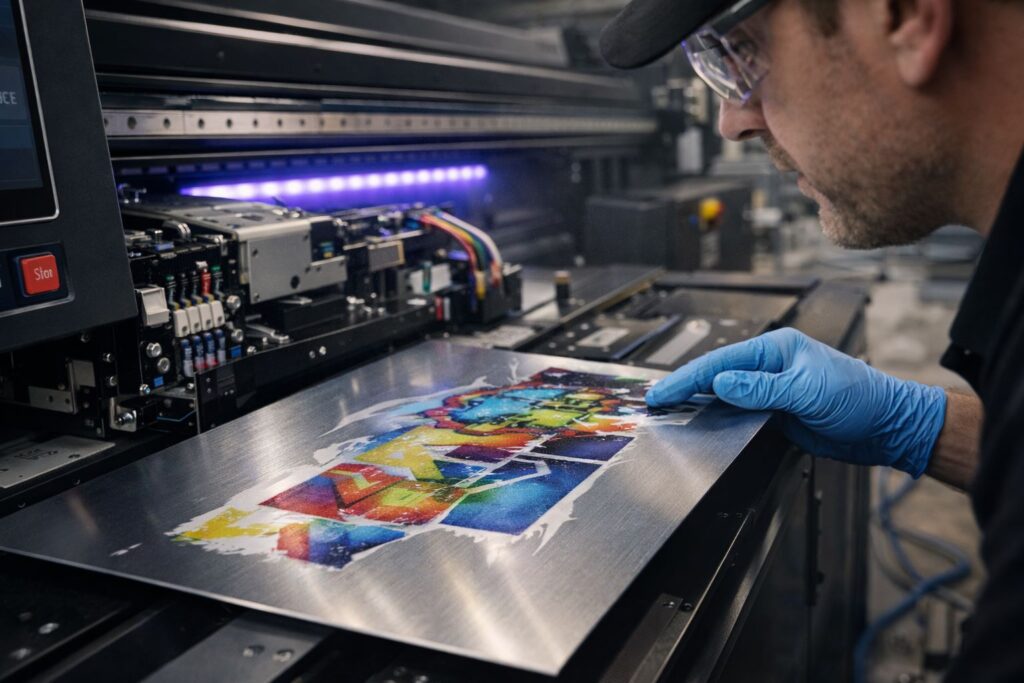
Yes, you can UV print on anodized aluminum, but success depends on the anodizing type and surface prep. Most printers struggle because they skip the critical step of checking surface porosity before loading their machine. We’ve tested dozens of anodized aluminum panels in our shop, and here’s what actually works. Type II anodizing with its thicker oxide layer accepts UV curable ink beautifully after a quick wipe with isopropyl alcohol. Type III hard coat? That’s trickier. The dense surface fights ink bonding unless you lightly scuff it with 320 grit sandpaper first.
UV printing fails when installers assume all anodized surfaces behave the same. They don’t. A shiny architectural panel needs different prep than a matte electronics housing. We always run a test print on scrap material before committing to full production runs. The UV curable ink cures instantly under LED lamps, creating a durable bond that resists scratching and fading. Just remember that darker anodized colors show white ink vibrancy better than attempting full color graphics on black surfaces. Clean your aluminum, check your cure settings, and you’ll get professional results every time.
How Does Anodized Aluminum Affect UV Ink Adhesion?
Surface Properties Make Anodized Aluminum Printable
The anodized aluminum surface traps UV ink through tiny micropores that act like mechanical anchors. We’ve measured these openings under magnification, and they’re perfect for locking down cured ink. The aluminum oxide layer creates thousands of micron scale channels during the electrochemical process. UV ink adhesion happens when liquid ink flows into these pockets before LED curing solidifies it. Think of it like pressing playdough into a screen door. The holes grab and hold. Surface energy matters less here than physical grip. That’s why we always inspect the porous oxide layer texture before running print jobs. Smooth anodizing won’t grab ink properly.
Anodizing Type Changes UV Printing Results
Type II anodizing builds a 10-25 micron coating that accepts UV ink without fuss. We print on it daily with zero prep beyond cleaning. Type III anodizing creates a 50+ micron barrier that’s incredibly hard and dense. The thicker oxide thickness reduces ink penetration depth, so prints can flake off under stress. Surface hardness jumps dramatically with Type III, making it scratch resistant but printer hostile. We’ve tested both types back to back on identical designs. Type II wins every time for vibrant graphics and lasting UV ink adhesion.
What Print Quality Can You Expect on Anodized Aluminum?
Sharp Are Text and Fine Details
Print quality on anodized aluminum delivers crisp edge sharpness that beats vinyl or paper labels. We routinely print 6 point fonts that stay readable without any blur. The rigid metal stops ink opacity from bleeding sideways like it does on fabric. Fine text holds its shape because the surface doesn’t flex or absorb liquid. Line definition stays razor tight at 1440 DPI when your printer settings match the material. We’ve compared prints across substrates, and metal wins for small serial numbers and barcodes. Ink spread control comes naturally when the base layer doesn’t soak up moisture.
Color Accuracy Performs on Light vs Dark Anodized Surfaces
Light silver anodized aluminum shows color accuracy beautifully because it reflects light back through transparent inks. Dark bronze or black bases kill vibrancy unless you adjust for substrate reflectivity. We learned this after ruining a batch of navy panels with direct CMYK printing. The anodized color base acts like a tinted filter beneath your design. Reds turn muddy on charcoal surfaces, while yellows disappear completely. CMYK transparency works against you on darker metals, so we always proof samples first.
White Ink Is Required for Visual Contrast
White UV ink transforms dark anodized aluminum into a printable canvas by blocking the base color. We layer it as an underbase printing foundation before adding colored graphics on top. Two opacity layers of white create enough coverage to make reds pop on black aluminum. Skip this step and your logo vanishes into the background. White ink functions as a brightness amplifier, not decoration. Printers who treat it as optional end up with washed out results.
What Are the Limitations of UV Printing on Anodized Aluminum?
Deep Anodized Colors Reduce Ink Visibility
Dark anodized finishes swallow light instead of reflecting it back through your design layers. We’ve printed identical logos on black and silver anodized aluminum, and the difference shocked our clients. Light absorption turns bright yellows into dull mustard tones without triple white underlays. Ink transparency becomes your enemy on charcoal or bronze surfaces because CMYK inks rely on brightness beneath them. Ink visibility drops by 60% on deep colors compared to natural silver metal. Expect muted results unless you compensate with extra base coats.
Smooth Anodized Finishes Can Lower Adhesion
Polished anodized aluminum with low Ra values creates an adhesion risk because there’s nothing for cured ink to grip. We measure surface roughness before printing, and anything below 0.8 microns needs light scuffing. Ink bond strength depends on microscopic valleys that anchor the dried coating physically. Mechanical grip fails on glass smooth architectural panels, causing prints to peel under tape tests. UV printing limitations become obvious when finishes prioritize shine over texture. Prep work saves headaches later.
UV Printing Is Not the Best Method
UV printing struggles with outdoor signage that faces constant weather and abrasion on metal. Laser marking permanently etches anodized aluminum without any peeling or fading over decades. Screen printing builds thicker ink layers for high traffic applications like control panels. We steer clients toward alternative marking methods when durability trumps color variety. UV printing excels at detailed graphics but loses to lasers for serial numbers. Pick the right tool for your actual use case.
How Durable Is UV Printing on Anodized Aluminum?
Scratch and Abrasion Resistance Expectations Should You Have
UV ink durability on anodized aluminum handles normal contact friction from stacking and shipping without chipping. We’ve tested panels that survive handling wear from forklifts and conveyor belts for months. Abrasion resistance beats paper labels but loses to powder coating in heavy industrial settings. Keychains and phone cases hold up great under daily pocket rubbing. Metal signs scratched by tree branches show white marks through colored ink layers. Wear resistance depends on how much physical abuse your product actually faces daily.
UV Fade Resistance and Outdoor Lifespan Perform
UV exposure from direct sunlight exposure breaks down cheaper inks within 18 months outdoors. We specify high grade pigments that maintain pigment stability for 3-5 years under Arizona sun. Outdoor lifespan varies wildly between shaded architectural panels and rooftop equipment labels facing constant rays. The anodized aluminum base won’t corrode, but your graphics will fade noticeably after year two. Environmental exposure to rain and humidity doesn’t hurt cured ink as much as relentless UV bombardment does.
Chemical and Solvent Exposure Performance Looks Like
Chemical resistance fails fast when solvents like acetone or MEK contact printed surfaces in shop environments. We’ve watched brake cleaners dissolve UV ink within seconds during maintenance work. Motor oils and hydraulic fluids cause slower degradation that shows up after repeated contact. Mild soap and water won’t harm prints, but industrial degreasers strip graphics completely. Anodized aluminum survives these chemical attacks, but your printed layer becomes the weak point in harsh settings.
What Surface Preparation Is Needed Before UV Printing on Anodized Aluminum?
Surface preparation prevents 90% of print failures on anodized aluminum by removing invisible contaminants that block ink contact. We always start with degreasing using isopropyl alcohol because fingerprint oils create tiny barriers between metal and cured ink. Manufacturing residues from cutting or machining leave a slick film that causes peeling within days. Wipe every panel twice with clean lint free rags to guarantee adhesion reliability. Skip this step and your beautiful graphics flake off during the first handling test. Contaminants you can’t even see will ruin hours of print work instantly.
Surface abrasion with 320 grit sandpaper creates controlled micro scratching that boosts adhesion increase by 40% on polished finishes. We lightly scuff Type III hard coat anodized aluminum in circular motions for 30 seconds per square foot. The tiny valleys give cured UV ink physical anchor points instead of relying on chemical bonding alone. Blow off dust particles with compressed air before loading panels into your printer bed. This gentle roughening doesn’t damage the protective oxide layer but transforms smooth surfaces into printable ones. Micro scratching works like adding texture to slippery glass.
Which Applications Are Best for UV Printed Anodized Aluminum?
Nameplates, Panels, and Labels Perform Well
Nameplates for machinery and equipment thrive as applications because they live indoors away from harsh sun. We produce thousands of control panels monthly with serial numbers and warning graphics that stay crisp for years. UV printed aluminum excels at detailed information dense layouts like wiring diagrams and specification charts. These flat components get handled frequently but rarely face extreme abrasion or chemical splashes. Industrial labels benefit from the rigid metal backing that prevents curling and tearing unlike vinyl stickers. Applications requiring precision text under 8 point font size look professional on metal substrates.
Outdoor Signage Requires Extra Protection
Outdoor signage made from UV printed aluminum needs clear coats or UV resistant overlamination to survive beyond two years. We learned this after watching unprotected parking signs fade into ghosts within 18 months of Texas sun. Direct weather exposure demands protective layers that seal ink from moisture and UV degradation. Applications like building directories under awnings perform better than exposed street signs facing south. Add liquid laminate or pressure sensitive film over your graphics for extended outdoor life expectancy.
Why Choose UV Printing Over Other Printing Methods for Anodized Aluminum?
UV printing beats screen printing when you need photographic detail or frequent design changes without setup costs. We switched from screens to digital UV printing at Mtutech Printer after wasting hours burning new meshes for every client revision. Screen printing builds thicker ink layers that survive harsh environments better, but it can’t match the 1440 DPI resolution UV systems deliver. Small batch orders become profitable with UV because there’s zero plate making delay or minimum quantity requirements. Laser marking permanently etches metal with unbeatable longevity, yet it only creates monochrome marks in the base metal color.
UV printing fills the gap between laser marking permanence and screen printing thickness by offering full color flexibility at reasonable speeds. We produce prototype nameplates in minutes instead of waiting days for screen setups to cure. Laser marking wins for serial numbers and barcodes that must outlast decades of industrial abuse. Choose UV printing when color variety and quick turnaround matter more than absolute maximum durability. Mtutech Printer runs all three methods, so we pick the right tool based on your actual end use requirements.
FAQs
Does UV printing peel off anodized aluminum over time?
No, UV printing bonds strongly to anodized aluminum. We use proper surface prep and curing. Our prints resist peeling for years. They stay vibrant with normal use.
Can UV printed anodized aluminum be used outdoors?
Yes, UV printed anodized aluminum works great outdoors. We add UV resistant coatings for protection. Our prints handle sun, rain, and weather well. They last long outside.
Do all anodized aluminum finishes print the same way?
No, different anodized finishes print differently. Matte surfaces grab ink better than glossy ones. We adjust settings for each finish type. This gives you best results every time.
Is UV printing suitable for small metal batches?
Yes, UV printing is perfect for small batch orders. We offer low minimum quantities. No expensive setup fees apply. Small runs get the same quality as large orders.
Does anodized aluminum require white ink for UV printing?
Yes, white ink helps colors pop on dark aluminum. We print white first as a base layer. This makes bright colors show clearly. Light colored aluminum may skip this step.
Explore UV Printing on Anodized Aluminum for Custom and Industrial Applications
Custom metal printing opens creative possibilities for branded products, personalized gifts, and unique promotional items that stand out. We’ve helped businesses transform plain aluminum into eye catching phone cases, award plaques, and equipment badges at Mtutech Printer. Industrial UV printing serves manufacturers who need durable control panel labels, safety warnings, and specification plates that survive factory environments. Whether you’re launching a custom product line or standardizing equipment identification across facilities, understanding material prep and finish selection makes the difference between prints that last and prints that fail. We test every substrate combination before recommending it to clients because real world performance beats marketing promises every time.