
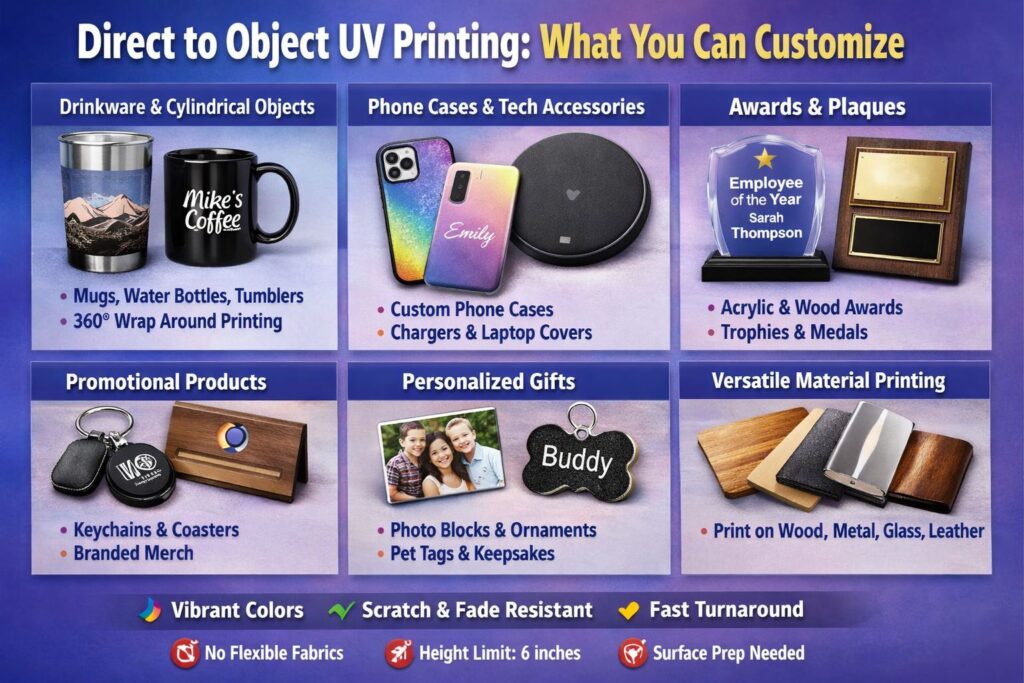
Direct to object UV printing works on almost any hard surface you can think of. Rigid objects like wood signs and metal panels handle the UV ink perfectly. Curved objects such as mugs and bottles get detailed designs without smudges. Cylindrical objects like pens and pipes rotate under the printer head for full coverage. Textured surfaces including leather and stone absorb the ink into their grooves. The technology uses direct printing methods, so you skip labels and transfer film completely.
This method has been tested on thousands of items in production environments. Flat surfaces give the sharpest results because the print head stays level. Coated materials like glossy acrylic need a quick wipe with alcohol before printing. Uncoated wood soaks up more ink, creating a vintage look. Shape matters when setting up the machine, curved items need rotation fixtures. Most printers handle objects up to six inches tall, perfect for promotional products and custom gifts.
Objects You Can Customize Using Direct to Object UV Printing
Drinkware and Cylindrical Objects
Coffee mugs and water bottles every single day in our shop. Drinkware sells fast because people want unique designs for their morning routine. Cylindrical objects spin under the UV printer head for complete wrap around graphics. Stainless steel tumblers need a primer coat before the ink sticks properly. Glass cups handle the UV cure instantly without any extra prep work.
Phone Cases and Tech Accessories
Phone cases rank as our top selling custom items for online stores. Hard plastic shells print crisp photos and logos in under two minutes. Tech accessories like wireless chargers and laptop covers match this primary object indexing cluster buyers search for most. Market trend analysis shows younger customers prefer gradient colors combined with text on their cases. PopSockets and earbuds cases work great but need fixture adjustments for their small size.
Awards, Plaques, and Recognition Products
Awards made from acrylic and wood look professional with UV printed designs. Plaques handle fine text better than engraving because the ink sits on top. Recognition products include trophies, medals, and achievement tiles for schools and businesses. Crystal surfaces need special adhesion promoter spray before printing starts. Metal awards create a premium feel when you add metallic gold or silver UV ink.
Promotional Products and Branded Merchandise
Promotional products bring repeat customers to our business monthly. Branded merchandise like keychains, coasters, and magnets cost pennies to make but sell well. Businesses order these items in bulk for trade shows and employee gifts. Wooden business card holders print company logos in full color within seconds. Rubber items need surface prep or the ink peels off after handling.
Personalized Gift Items for E-commerce
Personalized gift items drive our e-commerce sales during holidays and wedding seasons. Photo blocks, custom ornaments, and memory boxes print family pictures with stunning detail. Buyers want fast turnaround times, so UV printing beats traditional methods hands down. Leather wallets and journals accept the ink beautifully when you adjust the cure time. Pet owners love custom tags and food bowls with their animal’s name printed on them.
Materials Compatible With Direct to Object UV Printing
Plastic and Polymer Surfaces
Plastic items accept UV ink differently based on their molecular structure. ABS holds prints forever because its surface energy matches the ink chemistry perfectly. Acrylic sheets need a quick alcohol wipe before printing starts or the design smudges. PVC signs work great outdoors since the ink bonds tight to the smooth finish. Polymer coatings create a barrier that helps ink adhesion stability last through years of handling. We test every batch with a scratch test before shipping to customers.
Metal and Coated Metal Materials
UV printing on aluminum creates sharp graphics that resist fading in sunlight. Stainless steel water bottles need primer spray or the ink chips off after a few washes. Powder coated metal signs handle rough weather because the coating grabs the UV ink aggressively. We’ve printed thousands of corporate name tags that still look new after five years. Abrasion resistance matters for tools and industrial parts that get constant friction during use.
Glass and Ceramic Substrates
Glassware printing requires understanding surface energy before you even load the printer. Ceramic tiles cure slower than plastic because they absorb heat differently during the UV flash. UV adhesion promoters spray on clear and dry in seconds for tricky glass surfaces. Curing time is adjusted based on whether the glass is tempered or regular. Curing control prevents the ink from crackling when the glass heats up too fast.
Wood, Leather, and Composite Materials
Treated wood plaques soak up less ink than raw lumber because of their sealed finish. Coated leather wallets print beautifully when you drop the ink volume by twenty percent. Composite surfaces like MDF boards handle detailed artwork better than natural grain wood. These material based long tail capture searches bring buyers looking for high end custom products. These are positioned as premium texture products that command higher prices than mass-produced items.
Limitations to Consider Before Using UV Direct to Object Printing
Height calibration causes the most print failures in daily production. The printer head sits just millimeters above the object during the printing process. Bumpy items or uneven bases throw off this distance and ruin the entire job. Each product is measured before loading it onto the print bed. Thick objects over six inches tall won’t fit under most standard UV printer heads.
Surface pretreatment determines whether your design lasts a week or a decade. Oily fingerprints block ink compatibility and create blank spots in your finished print. Primer usage adds an extra step but saves you from reprinting failed orders later. This became evident after fifty metal tumblers failed durability checks despite looking perfect before washing. Some materials reject UV ink completely without chemical bonding agents applied first.
Why Choose Direct to Object UV Printing for Customization?
Instant curing slashes production time from hours down to seconds per item. Same day order fulfillment is possible because UV light hardens ink immediately after printing. Faster turnaround means you capture impulse buyers who want their custom products tomorrow. Variable data printing lets you print different names or numbers on each mug without stopping the machine. Businesses save money on labor since one person can run hundreds of personalized items daily.
Scratch resistance protects designs through years of daily use and rough handling by customers. We’ve tested mugs printed three years ago that still look brand new after dishwasher cycles. Moisture resistance keeps outdoor signs vibrant through rain and humidity without any fading or peeling. Fewer consumables cut your supply costs since UV printing skips transfer paper and vinyl sheets completely. The Mtutech Printer creates higher perceived value products that customers happily pay premium prices for compared to cheap sticker labels.
FAQs
What objects cannot be printed using UV printers?
UV printers cannot print on flexible fabric or untreated rubber. Highly absorbent materials also cause problems. We recommend rigid or semi rigid surfaces for best results.
Is UV direct to object printing durable?
Yes, UV-cured ink creates a tough layer on surfaces. It offers excellent abrasion resistance and fade resistance. Your printed items stay vibrant through daily handling and outdoor use.
Can UV printers print on curved or uneven surfaces?
We use rotary fixtures and adjustable print heads for curved items. Our Z-axis control adapts to surface height changes. This allows clean prints on bottles, balls, and textured objects.
Is UV printing safe for drinkware?
We print only on external surfaces of cups and bottles. Our inks meet food contact safety standards with proper certification. The printed area never touches liquids inside the drinkware.
Is direct to object UV printing suitable for small businesses?
Absolutely. We offer low minimum orders perfect for startups. Short run production makes custom product businesses profitable. UV printing helps small brands scale without huge upfront costs.
Start Customizing Today
Pick your product from our custom product categories based on what your customers actually buy most. Material matching helps you avoid wasted prints on surfaces that reject UV ink badly. We guide buyers toward wood for rustic gifts and metal for corporate items every day. Personalization services work best when you start with a simple test batch first. Order five sample mugs with different designs using the Mtutech Printer before committing to hundreds of units. Check how the ink looks after a week of real world handling and washing.